
Download Our App
Shop your way




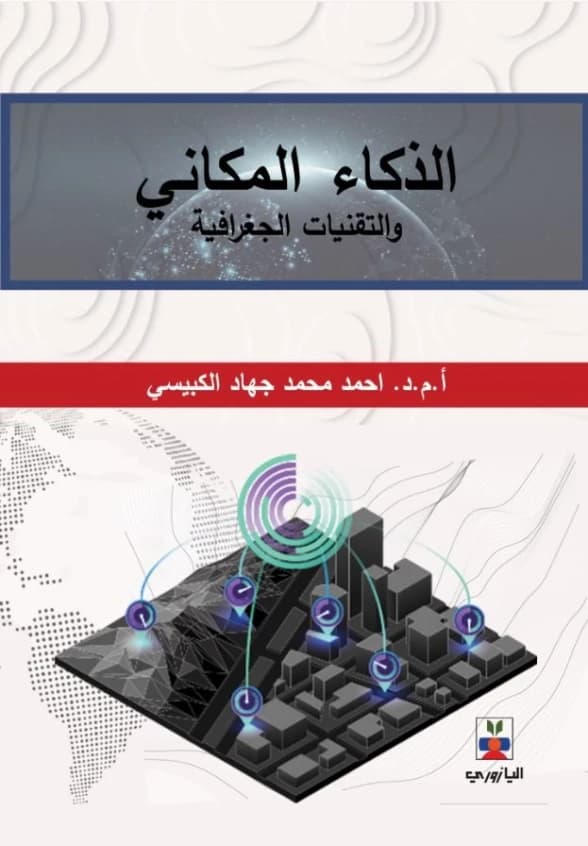
Spatial Intelligence and Geographic Technologies
JOD

Get it by 5 Aug | Order in 5 Hours 9 Minutes
- Return Policy
- Warranty Policy
- Shipping Policy
- Non contact delivery
- Personal Receipt
- Return Policy
- Warranty Policy
- Shipping Policy
- Non contact delivery
- Personal Receipt
Spatial Intelligence: It is the ability to comprehend through images and form them, the ability to accurately perceive the visual world and reshape it visually and spatially in the mind or on paper, as seen in artists, architects, and designers. These individuals tend to see what the teacher talks about to understand it, and they enjoy learning with illustrative boards, charts, maps, tables, presentations, and images. Those with this type of intelligence have the ability to understand and solve visual dilemmas, and they can form an accurate image and mentally alter it, such as imagining the story they are reading in all its details (houses, gardens, streets). They are also characterized by a good memory that stores faces and places, and they notice fine details that others do not, possessing a sensitivity to line, color, shape, and space.
Geographic Spatial Intelligence: It is the most significant characteristic a place holds. For example, when you hear the word 'Egypt,' the first thing that comes to mind is the pyramids. Thus, the pyramids have acquired the greatest significance in the place, becoming like the intelligence that characterizes Egypt. Similarly, if 'The Kingdom of Saudi Arabia' is mentioned, the first thing that comes to the listener's or reader's mind is the Two Holy Mosques. Therefore, the Two Holy Mosques have acquired a spatial intelligence that distinguishes the kingdom.
Spatial intelligence involves a high capacity for perceiving, creating, and re-creating images and visions. Photographers, artists, engineers, sculptors, and architects all use spatial intelligence. Spatially intelligent individuals have a keen insight into visual details, even if they are minor. They can sketch ideas using charts or visions and are able to transform words and impressions into mental concepts. Spatially intelligent individuals visualize things and have a strong sense of place and direction (Georgia O'Keeffe, Pablo Picasso). It refers to the ability to understand visuals. Learners with this intelligence tend to think using visual images and use maps, shapes, and pictures. Suitable professions and specializations include those related to travel, tourism, scouting, sculpture, fine arts, construction, architecture, or interior design.
- Weight: 0.65 kg
- Dimensions: 17 × 24 cm
- Author: Prof. Dr. Ahmed Mohammed Jihad Al-Kubaisi
- Cover Type: Paperback (regular)
- Internal Printing: Black
- Number of Pages: 220
- Publication Date: 2021
- Publisher: Dar Al-Yazouri for Science
- ISBN: 9789957129989







