
Download Our App
Shop your way




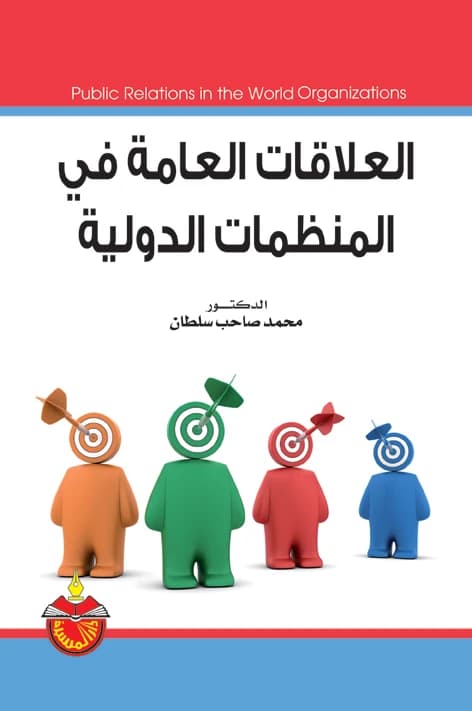
Public Relations in International Organizations - Dr. Mohammed Sahib Sultan - 2012
JOD

Get it by 5 Aug | Order in 3 Hours 22 Minutes
- Return Policy
- Warranty Policy
- Shipping Policy
- Non contact delivery
- Personal Receipt
- Return Policy
- Warranty Policy
- Shipping Policy
- Non contact delivery
- Personal Receipt
Public relations represents a cognitive tool and a communicative function of significant importance in the various aspects of our daily lives. It is the reflecting mirror of proper human interaction, as well as the discerning eye that penetrates to the foundations of truth, clarifying its aims and the objectives of the sponsoring and supporting bodies of this function. Communication and its channels are the essence of its work, just as it forms the correct interpretive bridges for every organization, whether it is an institutional entity of large or small size, local, regional, or international. It is the catalyst and the compass pointing the way for the organization to reach its internal and external audience, and a tool for clear public understanding through available means for its programs and goals by enhancing trust and public satisfaction, thereby gaining support for the objectives, interests, and mechanisms that every organization seeks to achieve.
Building on the foregoing, this book sheds light on a distinct theme of public relations methods and its mechanisms of action in a vital international sector represented by the specialized international organizations within the formations of the United Nations and its working teams with their various systems operating under the framework of the UN General Assembly. These bodies are: the Office of the United Nations High Commissioner for Refugees (UNHCR), the United Nations Children's Fund (UNICEF), the United Nations Institute for Training and Research (UNITAR), the United Nations Relief and Works Agency for Palestine Refugees in the Near East (UNRWA), the International Trade Centre (ITC), the United Nations University (UNU), the Registry of the International Court of Justice, the Trusteeship Council, or those that have taken the status of specialized international agencies. These are autonomous organizations that cooperate with the United Nations and among themselves through the Economic and Social Council and have significant international responsibilities in the economic, social, cultural, educational, health, and related fields. They include the International Labour Organization (ILO), the Food and Agriculture Organization of the United Nations (FAO), the United Nations Educational, Scientific and Cultural Organization (UNESCO), the International Civil Aviation Organization (ICAO), the World Health Organization (WHO), the World Bank Group, the International Monetary Fund (IMF), the Universal Postal Union (UPU), the International Telecommunication Union (ITU), the World Meteorological Organization (WMO), the International Maritime Organization (IMO), the World Intellectual Property Organization (WIPO), the International Fund for Agricultural Development (IFAD), the United Nations Industrial Development Organization (UNIDO), the World Trade Organization (WTO), and the International Atomic Energy Agency (IAEA).
The book also covers programs and organizations affiliated with the United Nations, represented by the International Research and Training Institute for the Advancement of Women (INSTRAW), the United Nations Centre for Human Settlements (UNCHS), the United Nations Conference on Trade and Development (UNCTAD), the United Nations International Drug Control Programme (UNDCP), the United Nations Development Programme (UNDP), the United Nations Environment Programme (UNEP), and the United Nations Population Fund (UNFPA).
The author has delved into some detail and review of the programs, bodies, and funds directly affiliated with the United Nations, focusing on the United Nations Children's Fund – UNICEF as a model for public relations work. The same applies to the sixteen specialized agencies, where the focus was on the United Nations Educational, Scientific and Cultural Organization (UNESCO) as a model for the same reason, which is the similarity of the public relations mechanism in these agencies, with some minor specificity for each, concentrating on understanding the detailed specifics of that performance, especially the communication performance that forms the backbone of public relations work for both organizations (UNICEF and UNESCO); how it crystallizes and how decisions are made regarding the working mechanism and the choice of communication means in each. This is in addition to the many joint works they have performed in more than one country at the educational, health, and cultural levels.
Therefore, the book is divided into twelve chapters. The first chapter covers the United Nations, discussing its establishment and the stages of international work that preceded its emergence. The second chapter deals with institutions affiliated with the United Nations (programs - organizations - specialized agencies). The third chapter discusses UN staff, work standards, and performance determinants, as well as how the international organization deals with communication channels. The fourth chapter is dedicated to the systems and methods of work in UNICEF. The fifth chapter addresses childhood standards and the system of work. The sixth chapter discusses UNICEF's working mechanisms with communication channels and its programs in Iraq after April 9, 2003. The seventh chapter includes the systems and methods of work in UNESCO. The eighth chapter discusses UNESCO's mechanism for implementing its activities. The ninth chapter is dedicated to UNESCO's network in the sectors of education, science, culture, and communication. The tenth chapter covers the communication patterns of public relations work in UNESCO. The eleventh chapter is allocated to joint programs between UNICEF and UNESCO. The twelfth chapter deals with the results of the field study, which aimed at analyzing and comparing the most important general characteristics of public relations performance in UNICEF and UNESCO, with an analysis of the factors affecting the behavioral performance of public relations practitioners in selecting their communication tools.
- Number of Pages: 414
- Year of Publication: 2012
- Binding Type: Hardcover
- Edition: 1
- Printing Color: Black
- Size (cm): 17x24
- Weight (kg): 0.800
- Barcode: 9789957069148







