
Download Our App
Shop your way




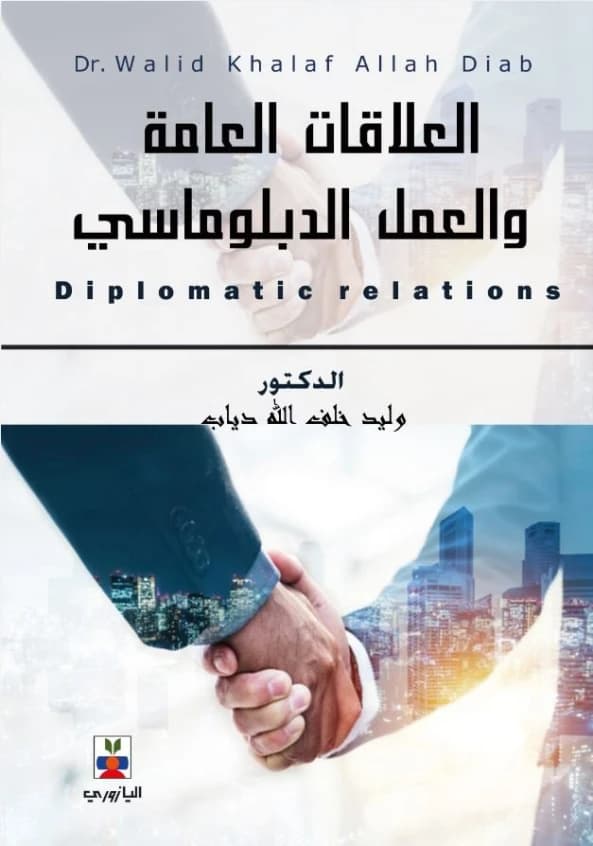
Public Relations and Diplomatic Work - Dr. Walid Khalaf Allah Muhammad Diab
JOD

Get it by 5 Aug | Order in 3 Hours 8 Minutes
- Return Policy
- Warranty Policy
- Shipping Policy
- Non contact delivery
- Personal Receipt
- Return Policy
- Warranty Policy
- Shipping Policy
- Non contact delivery
- Personal Receipt
The importance of international public relations has grown worldwide as a result of technological, political, and economic changes that have granted its people freedom of expression and recognized the power of public opinion. The success achieved in this field has enabled the rapid and easy dissemination of information and ideas, providing opportunities for people to connect and significantly influence global public opinion.
International public relations acts as a link between institutions within a single society and between different societies by providing specific services based on mutual trust, stemming from the importance of the individual, social segments, and the powerful influence of public opinion on various economic, social, and political institutions.
International public relations can be broadly defined as 'the management of communication between an organization and its publics.' This means that public relations is a composite of many functions, including media relations, communication, research, production, evaluation, management, planning, and public affairs. These and other fields constitute the vital and continuously evolving domain of the public relations specialty.
The goal of communication between an organization and its publics is to influence public opinion on a specific idea or issue. Public relations directs its communication messages to several key audiences, including governments, political and economic communities, opinion leaders, internal publics, and the media.
In recent years, there has been a noticeable increase in interest in international public relations, with international organizations increasingly developing their public relations functions and companies hiring top talent for their PR departments. Thus, the effectiveness of public relations has been confirmed for organizations and institutions in general, whether local or international, in the various communicative efforts exerted in performing different activities and achieving PR objectives. This has strengthened the institution's relationship with its various publics in a way that achieves the organization's goals.
Consequently, the environment of organizations of all types has received attention and study since the 1950s, with a significant increase in interest over the last ten years. The organization is viewed as a living entity open to and interacting with the external world, influencing it and being influenced by it continuously. Many researchers have emphasized that managing an organization's relationship with its publics is the primary challenge it faces today, due to its impact on the organization's marketing and promotional mix. This topic has become the focus of modern communication studies, gaining great importance in light of several factors and variables that have emerged in the environment of contemporary organizations, such as globalization and strategic alliances, especially amid intense competition and the need to gain a competitive advantage.
All these factors have necessitated significant developments in the communication strategy of organizations. The departments responsible for communication in these organizations must work collaboratively to manage communications and the organization's relationships with its publics. The best way to achieve this is to establish an organizational communication strategy based on adapting as quickly and successfully as possible to various environmental changes and in light of the needs of both the organization and its publics.
Therefore, international public relations efforts have become a central axis in the communication strategy of any organization due to the vital role of public relations in identifying the nature of variables in the organization's environment at both internal and external levels. There is a need to develop communication programs aimed at helping the organization adapt to environmental conditions in a way that ensures the long-term maintenance of its relationship with its publics.
Successful international public relations is the only available alternative to create a positive climate in which multinational organizations and companies operate with the peoples of host countries and with their vast number of internal publics worldwide. This is aided by modern communication technology, which allows international public relations to disseminate information globally, in addition to the removal of obstacles to global business expansion, the growth of international competition, the rise of specialization in work, and the world reaching the stage of a 'global village'.
Globalization and the technological revolution have accelerated the pace of change in various areas of daily life and international relations, prompting societies to expand, provide knowledge, and facilitate access to information, enabling communities and bodies to establish good relations with each other. The emergence of civil society as non-governmental actors in communicating with peoples has also highlighted the importance of contemporary public relations and diplomacy in interconnected societies.
On the other hand, the role of public relations is clearly affected by the internal and external variables of the organization, which calls for measuring the nature and extent of this impact on the public relations function in the diplomatic sector, especially in light of the development of diplomatic organizations due to the revolution of modern technology and science and its spread throughout the world. Diplomatic organizations have made a great leap in their methods, arts, and performance, so that the contemporary international community has witnessed new forms and patterns of the diplomatic art that the world has never seen before. Thus, diplomacy was destined to shed its old methods and traditions that were no longer in line with the spirit of the age, while retaining its core functions and developing modern methods and approaches to keep pace with the new conditions and situations in the contemporary international community. This book seeks to identify the nature of the role of public relations and diplomatic media in diplomatic institutions and sectors and the communication efforts exerted in practicing this profession, especially given the scarcity of Arab studies that have addressed the nature of this function and sought to measure it in the Arab work environment.
- Weight: 0.8 kg
- Dimensions: 17 x 24 cm
- ISBN: 978-9923-43-008-8







