
Download Our App
Shop your way




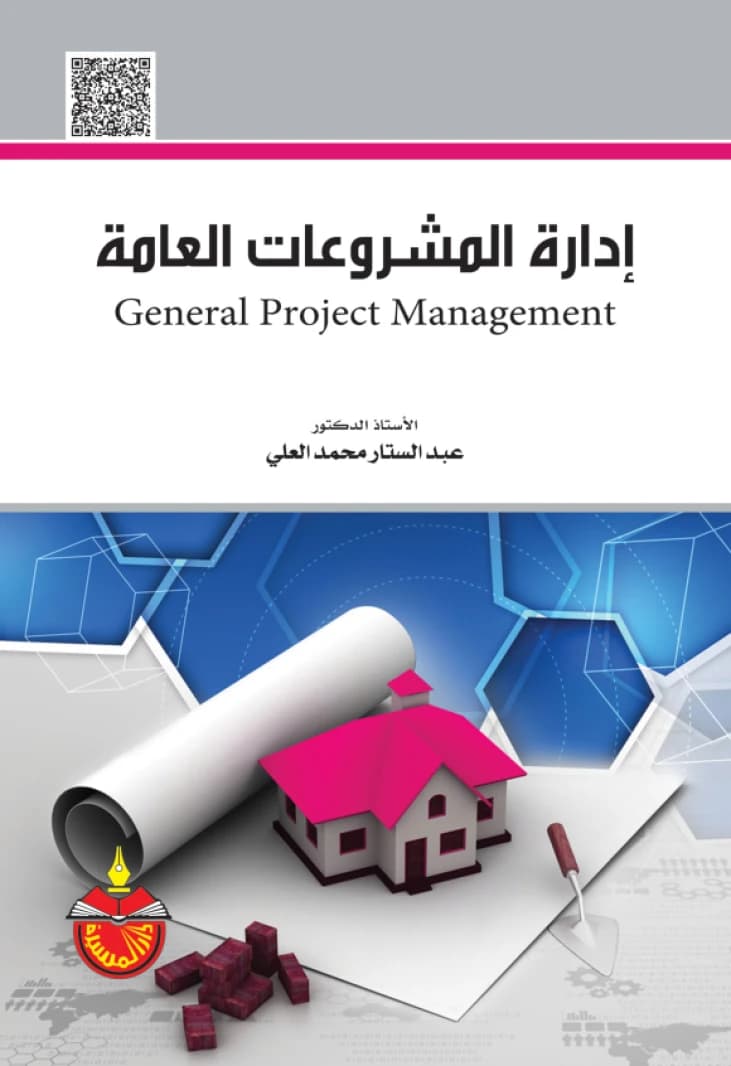
Public Project Management - Abdul Sattar Al-Ali - 2016
JOD

Get it by 5 Aug | Order in 3 Hours 40 Minutes
- Return Policy
- Warranty Policy
- Shipping Policy
- Non contact delivery
- Personal Receipt
- Return Policy
- Warranty Policy
- Shipping Policy
- Non contact delivery
- Personal Receipt
The construction sector in Jordan constitutes more than 10% of the Gross National Product (GNP) in terms of spending on various construction projects. It represents a vital axis that plays an effective role in driving the Jordanian economy by providing a suitable environment for development and encouraging investment. Construction projects, especially infrastructure projects like transportation, communications, public works, service projects, water, and irrigation, play a pioneering role in this regard.
Buildings, roads, and other construction works such as bridges, transportation routes, water stations, and sewage purification systems form the essential infrastructure for various economic activities. Although many researchers consider the Manhattan Project—the development of the first atomic bomb—as the dawn of modern-era projects, past ages were not devoid of project management practices. The need to manage resources to develop new outcomes has always existed. The pyramids in Egypt, for instance, are a type of project undertaken by groups of people using available resources to bring these structures into existence within a specific timeframe. The same applies to the Great Wall of China and the Hanging Gardens of Babylon in Iraq. The ancient Roman cities, with their streets, buildings, and irrigation systems—exemplified by the archaeological city of Jerash and Petra in Jordan—are testaments to various types of these colossal projects.
The concept of a project in the present time has crystallized as a product of the business and industrial environments, which are characterized by change and the constant need to develop new markets and products. This, in turn, requires new organizational patterns, and projects have always been the administrative tool for such patterns. Project management has received significant attention in companies, especially those seeking new techniques to manage projects in a noticeable and increasing manner to adapt to the changing environment, relying on two main factors: the complexity of the project and its surrounding conditions.
Through his expertise in this field, the author has organized this book to be used throughout the project life cycle as a primary organizational guide in project management. The book is divided into three parts and fourteen chapters, in addition to appendices and questions. It covers the concept and nature of project management, project life cycle, feasibility studies, planning and control, network analysis, project budgeting, cost estimation, risk management, project evaluation, and the application of value engineering. This work is presented to students, scholars, project managers, and professionals in this sector, and we believe it will also assist fellow instructors who teach "Project Management" in universities.
- Number of Pages: 576
- Year of Publication: 2016
- Binding Type: Hardcover
- Edition Number: 3
- Print Color: Black
- Dimensions (cm): 17x24
- Weight (kg): 1.000
- Barcode: 9789957065010







