
Download Our App
Shop your way




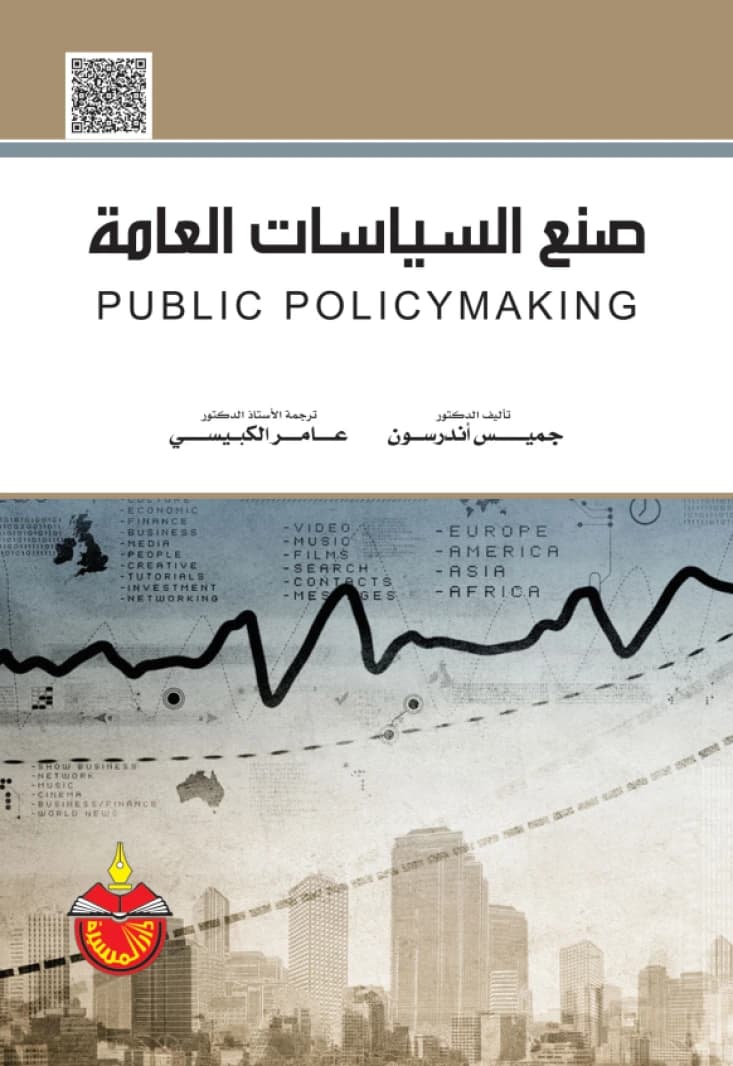
Public Policymaking by James Anderson
JOD

Get it by 5 Aug | Order in 0 Hours 40 Minutes
- Return Policy
- Warranty Policy
- Shipping Policy
- Non contact delivery
- Personal Receipt
- Return Policy
- Warranty Policy
- Shipping Policy
- Non contact delivery
- Personal Receipt
The study of public policy has received significant attention and wide circulation from political scientists in recent years. Many have expressed a desire or have actively contributed to its study, analysis, and engagement in its sub-disciplines, and the schools and programs dedicated to its teaching and research are constantly increasing. Specialized organizations and bodies for its study have been established, and scientific journals dedicated to public policy issues have emerged and become available to scholars, such as the Policy Analysis Journal, the Journal of Policy Sciences, and the Policy Studies Journal. Despite this growing interest in public policy, disagreement persists about what public policy means, how it should be studied, and the legitimacy of political scientists' interest in its topics. Some believe that processes, not policies, are what political scientists should focus on, while others disregard such questions, emphasizing the need for political science specialists to delve into the details of public processes and policies. We align with the latter and present this book for them. The public policy approach in political science is concerned with both domains: the first focuses on public policy problems such as inflation, equal employment opportunities, or relations with the former Soviet Union, which is then followed by an interest in what was done, how it was done, and its repercussions and results. The role of institutions, processes, and political elements, such as public opinion, are all taken into account as they help determine the type of action taken by the government. In this book, I have adopted the approach of public policymaking and analysis as it addresses all the difficulties surrounding the field, acknowledging that we will not provide final answers or absolute truths, nor will we cover the content of all public policies, although some are mentioned in the fifth chapter. By reading this book, the student can gain a better understanding and capacity to analyze the difficulties that face future public policymaking.
- Number of Pages: 240
- Year of Publication: 2017
- Binding Type: Paperback
- Edition Number: 6
- Printing Color: Black
- Dimensions (cm): 17x24
- Weight (kg): 0.600
- Barcode: 9789957060251







