
Download Our App
Shop your way




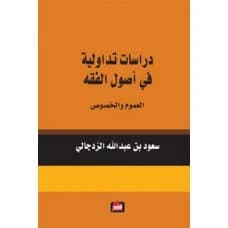
Pragmatic Studies in the Principles of Islamic Jurisprudence - Saud bin Abdullah Al-Zadjali
JOD

Get it by 5 Aug | Order in 3 Hours 11 Minutes
- Return Policy
- Warranty Policy
- Shipping Policy
- Non contact delivery
- Personal Receipt
- Return Policy
- Warranty Policy
- Shipping Policy
- Non contact delivery
- Personal Receipt
To what extent is it legitimate to study the methodological data of Usul al-Fiqh (Principles of Islamic Jurisprudence) in light of modern linguistic schools such as semiotics, pragmatics, analytical philosophy, and phenomenology? Can we find within the traditional schools of jurisprudence in our heritage an opening for research and a re-examination of Sharia evidence using modern methods that can serve as a methodological tool to invest in, reinterpret, and question the text? The incorporation of all renewed methodological tools in jurisprudential discourse towards legislative horizons that were not present to the first generation of jurists is a cognitive and methodological necessity, enabling the text to keep pace with renewal. The jurist did not grant sanctity to his understanding; a text may be definitive in its transmission and meaning, presumptive in its transmission and meaning, definitive in transmission and presumptive in meaning, or presumptive in transmission and definitive in meaning. However, it allows room for error in its interpretation and a possible chance for revision. We find that the text is subject to processes between the two jurisprudential terms: 'the text' (al-nass) and 'the apparent' (al-zahir), according to contextual clues, the circumstances of meaning formation, and belief systems. Therefore, it is necessary to legitimize the integration between the methodologies of the 'Self' and the contemporary 'Other', to uncover aspects of authenticity and convergence, and to benefit from these contemporary methods without compromising the essence and constants of legislation, erasing its Arab identity, or attempting to misrepresent, force, or project onto it.
- Author: Saud bin Abdullah Al-Zadjali
- Publishing House: Dar Al Farabi for Publishing and Distribution
- Number of Pages: 336
- Year of Publication: 2016
- ISBN: 9786144325490







