
Download Our App
Shop your way




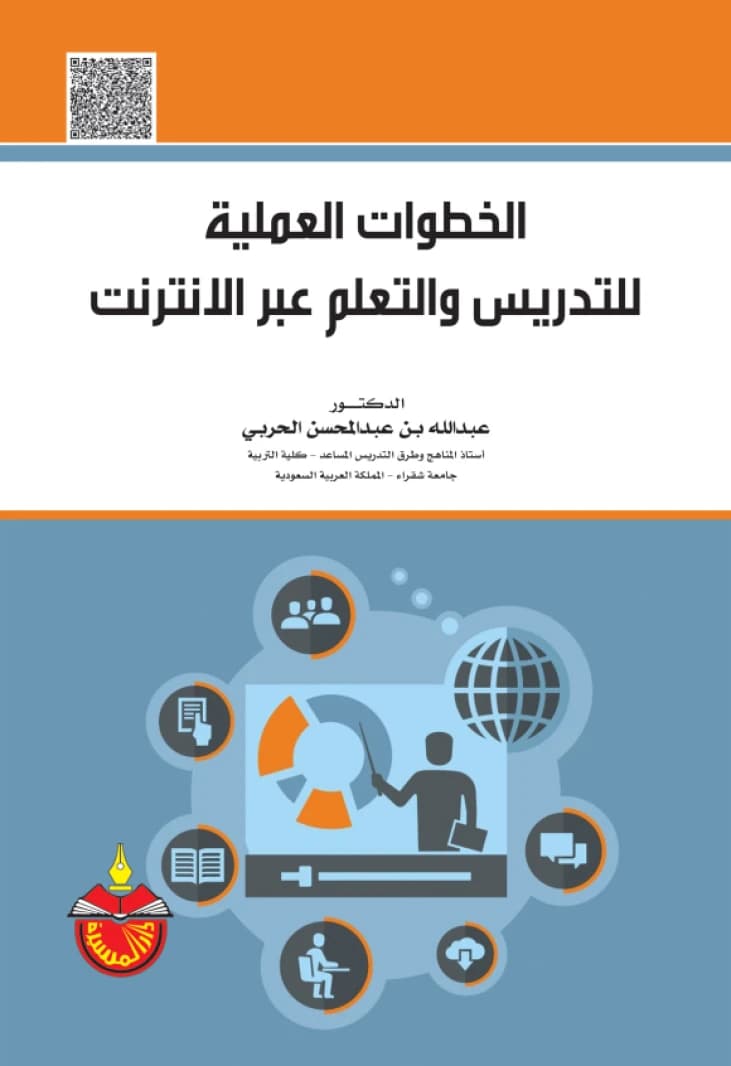
Practical Steps for Teaching and Learning Online - Dr. Abdullah bin Abdulmohsen Al-Harbi
JOD

Get it by 5 Aug | Order in 2 Hours 38 Minutes
- Return Policy
- Warranty Policy
- Shipping Policy
- Non contact delivery
- Personal Receipt
- Return Policy
- Warranty Policy
- Shipping Policy
- Non contact delivery
- Personal Receipt
Undoubtedly, the increasing growth in internet usage has contributed to integrating this technology into the field of education and learning, driven by the desire to reach learners anywhere and anytime, and to provide more educational opportunities. The traditional educational system may not be able to accommodate all applicants due to limitations such as building size, seating, tables, teachers, and other resources required by the traditional teaching and learning method.
The internet has offered, and continues to offer, many advantages not previously available in the traditional education system (Wiske, 2005). It is the next catalyst for shifting the educational process from a focus on traditional teaching to developing learner skills. This shift in thinking, associated with online education practices, has the potential to redefine the roles of both teacher and learner within this new framework.
The transition from traditional teaching and learning to online teaching and learning presents a clear challenge for teachers and their educational institutions. Many members of these institutions do not believe in the benefits of online education, and some do not see its advantages over the traditional method, which relies on face-to-face interaction between teacher and student in one place. In fact, some believe it may have negative effects on learners.
Furthermore, many teachers support e-learning or online learning but see it as nothing more than the teacher posting prepared lessons on their self-designed webpage, allowing students to download them whenever they wish.
In reality, online teaching and learning have undergone numerous international studies and experiments since the inception of this global service. These have resulted in the definition of concepts and scientific steps to ensure the success of online education and achieve the desired educational objectives. This book will introduce the reader to most of these concepts and steps through scientific material compiled by the author over several years, involving the translation of many studies and the reading of specialized books. A distinctive feature of this edition is its focus on skill acquisition in addition to good information. At the end of each chapter, you will find practical steps for using a program beneficial for internet interaction or for leveraging an existing online service that many have overlooked.
- Number of Pages: 152
- Year of Publication: 2016
- Binding Type: Paperback
- Edition Number: 1
- Printing Color: Black
- Dimensions (cm): 17x24
- Weight (kg): 0.450
- Barcode: 9789957970857







