
Download Our App
Shop your way




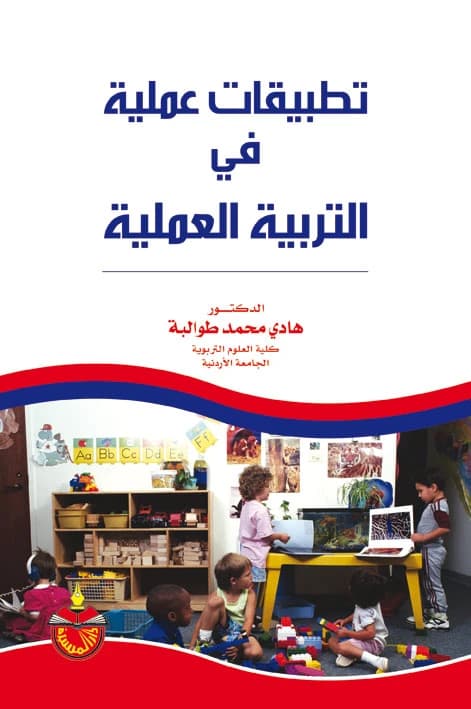
Practical Applications in Practical Education - Hadi Mohammed Tawalbeh - 2009
JOD

Get it by 5 Aug | Order in 3 Hours 57 Minutes
- Return Policy
- Warranty Policy
- Shipping Policy
- Non contact delivery
- Personal Receipt
- Return Policy
- Warranty Policy
- Shipping Policy
- Non contact delivery
- Personal Receipt
The first chapter addresses the topic 'For a Better Professional Life,' which discusses the necessity of transforming traditional schools and classrooms into creative environments and focusing on quality in education. The second chapter covers practical education experiences in various countries, details the University of Jordan's experience in practical education, and concludes with a future outlook. The third chapter includes key elements of practical education, such as the general meeting for practical education students, weekly seminars, the student-teacher's relationship with other parties, the student-teacher's achievement portfolio, a model for reflective sessions on teaching and learning situations, the daily performance report, the student-teacher performance monitoring card, and model follow-up procedures. The fourth chapter highlights the duties of the student-teacher, the duties and roles of the cooperating teacher, and the duties and roles of the cooperating school principal. The fifth chapter covers various topics on lesson planning for diverse educational subjects and experiences, a mental reflection model for preparing a lesson plan, in addition to various planning notes for educational experiences in different subjects. The sixth chapter deals with classroom management through several themes like learning with love, the classroom constitution, the thinking chair, and the covenant document. The seventh chapter addresses teaching aids and activities, while the eighth chapter presents detailed applied lessons in various educational experiences. The 'A Step Forward' program is discussed in the ninth chapter through emotional, linguistic, mathematical, and behavioral steps forward. The tenth chapter contains worksheet templates, and reinforcement files are found in the eleventh chapter. 'The Distinguished Teacher' is the topic of the twelfth chapter, which studies the Queen Rania Al Abdullah Award for Educational Excellence as a contemporary model that seeks to identify distinguished teachers through global standards. Concurrently, the thirteenth chapter refers to the national standards for the professional development of teachers, and the author offers advice for the 'teacher we want' in the fourteenth chapter. 'The Classroom: Observations and Notes' is covered in the fifteenth chapter, which also presents a model classroom map. The sixteenth chapter highlights modern assessment strategies and tools, including applied models. The seventeenth chapter's topic is educational messages that express the conditions of those in the teaching profession through the eyes of their students. The eighteenth chapter points to the experiences of some student-teachers in practical education. The nineteenth and final chapter includes the approved models for field training in the specializations of classroom teacher and child education.
- Number of Pages: 372
- Year of Publication: 2009
- Binding Type: Paperback
- Edition Number: 1
- Printing Color: Black
- Dimensions (cm): 17x24
- Weight (kg): 0.750
- Barcode: 9789957065454







