
Download Our App
Shop your way




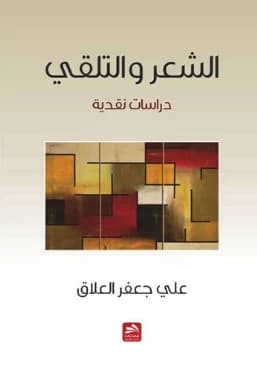
Poetry and Reception - Dr. Ali Jaafar Al-Allaq
JOD

Get it by 5 Aug | Order in 3 Hours 49 Minutes
- Return Policy
- Warranty Policy
- Shipping Policy
- Non contact delivery
- Personal Receipt
- Return Policy
- Warranty Policy
- Shipping Policy
- Non contact delivery
- Personal Receipt
- Parts: 1
- Subject: Arabic Language and Literature
- Year: 2013
- Edition: First
- Dimensions: 17x24 cm
- Number of Pages: 224
- Weight: 380g
- Language: Arabic
Dr. Ali Jaafar Al-Allaq opens the door wide for researchers to delve into the topic of the writer-reception relationship. For him, poetry is not a text without meaning, as a poem is not merely a linguistic adventure or a departure from its usual conventions; rather, it inherently contains meaning. The poetic quality of any poem does not lie outside its text but in the poet's ability to violate established norms, sayings, and familiar expressions.
As the author sees it, a poem is a simulation of life outside the text, an approximation of the details of that non-textual reality as much as possible. Through it, the poet tries to solidify his connection with reality on one hand, and on the other, to transform it into a textual or linguistic reality. In his research on the theme of the 'mask' in modern Arabic poetry, the author notes that many poets like Al-Bayati, Adonis, Abdel-Sabour, and Saadi Youssef have benefited from this technique, enabling them to elevate their poetry to a level not previously reached in terms of expressive power and avoiding compositional fragility and excessive self-disclosure.
He defines the mask as a symbol a poet adopts to add an objective tone to his voice. This symbol often takes the form of a historical figure who delivers their speech in the first person. The mask, according to him, is generally characterized by personal speech or monologue. He also posits that modern Arab poets have attempted to free their poetic texts from the dominance of romantic sentiments and prevailing lyrical stances by using what they found to be the most appropriate means to express their spiritual struggle: the mature use of historical figures as masks.







