
Download Our App
Shop your way




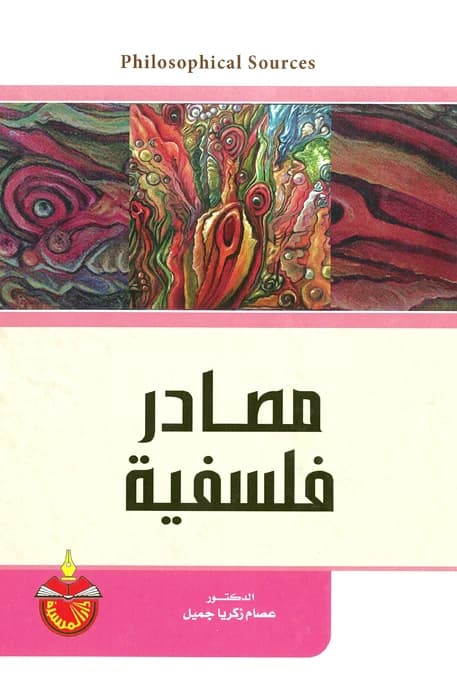
Philosophical Sources - Essam Zakaria Jamil
JOD

Get it by 5 Aug | Order in 5 Hours 7 Minutes
- Return Policy
- Warranty Policy
- Shipping Policy
- Non contact delivery
- Personal Receipt
- Return Policy
- Warranty Policy
- Shipping Policy
- Non contact delivery
- Personal Receipt
Philosophical sources are the sayings of philosophers that have been preserved for us in writings in their original language, serving as a direct expression of the philosophers' concepts and viewpoints. Philosophical sources are pure philosophy itself, what philosophers said directly without mediation, interpretation, or explanation that might lead to misunderstanding their intent.
The value and esteem of a student's study of philosophy are enhanced by their reliance on texts for presentation and evaluation, as the text is the proof of the idea presented and an eyewitness to it. The best way to read a philosophical text is in its original language, not in translation from another language, as translation necessarily omits some important aspects of the original texts. This shortcoming or inadequacy is not only due to the accuracy and philosophical competence of the translators but may also be attributed to the differences between languages in their characteristics, expressive capabilities, and varying methods of conveying understanding.
This book is divided into several chapters. In the first chapter, we address ancient Greek philosophy, presenting Plato and his dialogue "The Republic," as well as Aristotle and his two books "On the Soul" and "Nicomachean Ethics." The second chapter is titled "Western Philosophy in the Middle Ages," where we have chosen Saint Augustine and his book "Confessions," and Saint Thomas Aquinas and his book "On the Governance of Rulers." In the third chapter, we cover Islamic philosophy in the Middle Ages with Al-Kindi's "On First Philosophy," Al-Farabi's "On the Perfect State," Al-Ghazali's "The Incoherence of the Philosophers," and Ibn Rushd's "The Decisive Treatise." The fourth chapter is titled "Modern and Contemporary Philosophy," where we present its leading figures, including Francis Bacon and his book "Novum Organum," René Descartes and his "Principles of Philosophy," John Locke and his "An Essay Concerning Human Understanding," and Hegel and his "Phenomenology of Spirit." The final philosopher discussed is Gottlob Frege and his philosophical masterpiece "The Foundations of Arithmetic."
- Number of Pages: 368
- Year of Publication: 2012
- Cover Type: Paperback
- Edition: 1st
- Print Color: Black
- Size (cm): 17x24
- Weight (kg): 0.700
- Barcode: 9789957068271







