
Download Our App
Shop your way




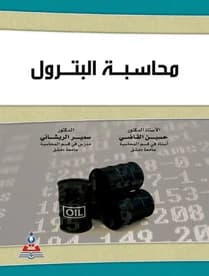
Petroleum Accounting by Prof. Dr. Hussein Al-Qadi
JOD

Get it by 5 Aug | Order in 3 Hours 28 Minutes
- Return Policy
- Warranty Policy
- Shipping Policy
- Non contact delivery
- Personal Receipt
- Return Policy
- Warranty Policy
- Shipping Policy
- Non contact delivery
- Personal Receipt
Petroleum constitutes the main source of energy and income and is considered an important political and economic influencer for countries and governments in general. It is the cheapest energy source for securing heavy and manufacturing industries of all kinds, and the cheapest commodity for heating and operating transportation in the air, at sea, and on land. This makes control over its production, distribution to consumption areas, and consequently its pricing, a field of political and military conflict among nations. Thus, studying the history of petroleum in the modern era serves as a tool for explaining many contemporary wars and political conflicts.
The petroleum production industry is characterized by a special technical and economic nature. The element of risk and uncertainty of results is inevitable in the research and exploration phase, which may not lead to economically feasible outcomes, or conversely, may lead to viable results that allow for the full recovery of investment costs in a short period. This industry also requires large capital and a long recovery period, which generally makes developing countries unable to finance the enormous expenses necessary for petroleum exploration, development, and production on their own. This makes these activities a field for several types of petroleum contracts such as concessions, lease agreements, and production sharing contracts, which has clear effects on accounting.
Furthermore, the special technical nature of petroleum, often discovered mixed with associated gas, water, and impurities, has left significant impacts on the accounting practices of petroleum production companies. These companies must depict their technical and legal activities in a way that is accurately reflected in their financial statements.
The various economic, political, technical, and legal factors of the petroleum production industry have made the subject of petroleum accounting a prominent topic in contemporary American accounting literature, given the distinguished activity of American companies in petroleum exploration and production. This leads all companies operating in this field around the world to follow the accounting standards and rules for petroleum exploration and production activities issued by the Financial Accounting Standards Board (FASB) in the United States. This is in addition to the rules and procedures adopted by the Securities and Exchange Commission (SEC) and required of publicly listed companies. The International Accounting Standards Board (IASB) has also recently taken interest in accounting standards for extractive industries, primarily oil and gas production, and issued International Financial Reporting Standard IFRS 6, which addresses the exploration for and evaluation of mineral resources.
- ISBN: 9789957165161
- Weight: 0.800 kg
- Dimensions: 17×24 cm
- Paper: White
- Pages: 368
- Year of Publication: 2010
- Binding: Hardcover







