
Download Our App
Shop your way




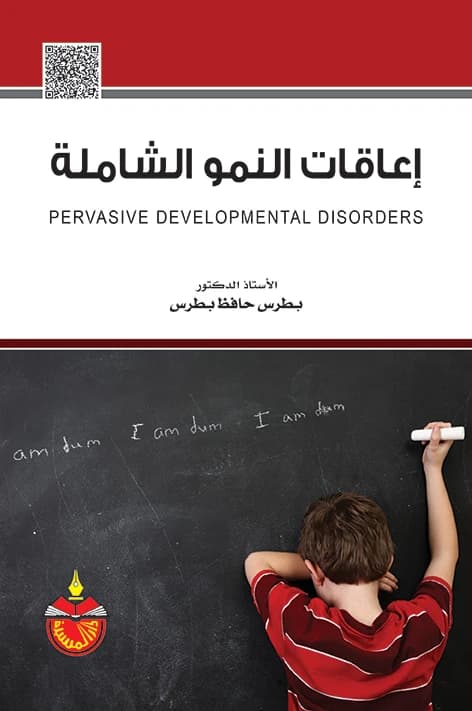
Pervasive Developmental Disabilities - Boutros Hafez Boutros
JOD

Get it by Tomorrow | Order in 11 Hours 39 Minutes
- Return Policy
- Warranty Policy
- Shipping Policy
- Non contact delivery
- Personal Receipt
- Return Policy
- Warranty Policy
- Shipping Policy
- Non contact delivery
- Personal Receipt
The Arab community was introduced to autism and the autism spectrum amidst the scientific and information revolution. With a scarcity of specialists in child mental health and reliance on popular media, 'autism' became a catch-all explanation for any normal or abnormal child behavior. A misfortune of our developing world is that diagnoses are often made by non-specialists, leading families down a futile path that ends in despair and mental exhaustion.
Autism, or the autism spectrum, is one of the most complex developmental issues that can face a family, teacher, legislator, and policymaker. The problem is linked to the autistic child's learning and their individual and civil rights. This is for several reasons, including but not limited to: the causes are not definitively known, characteristics vary greatly, and treatment methods differ based on the theoretical framework adopted by the therapist.
In 1943, psychiatrist Leo Kanner wrote an article describing eleven patients he had followed for years. These children exhibited a set of symptoms different from the psychological conditions he was accustomed to. He used the term 'Autism' for the first time to describe it, and subsequent research has attempted to clarify its mysteries.
Also in 1943, in Vienna, Austria, Hans Asperger discovered cases with features and symptoms different from Kanner's autism. He published his research in German, but it was not widely recognized in America until 1981 when Lorna Wing summarized his work in English. In 1991, Uta Frith's book on autism and Asperger's disseminated these findings. The condition, previously called High-Functioning Autism or Mild Autism, became known as 'Asperger's Syndrome'. After studying thousands of cases, it was justified as an independent disability under the umbrella of Pervasive Developmental Disorders.
Another condition, 'Rett's syndrome,' was named after its discoverer, Austrian physician Andreas Rett, who identified cases with symptoms different from autism.
It is crucial to recognize abnormal behaviors in a typical child before diagnosing them as behavioral disorders. Diagnosing autism requires specialists and the application of scientific criteria like the DSM-4 and ICD-10. A family with a child with a behavioral disorder must understand their condition to determine the appropriate therapeutic and rehabilitative interventions at all levels: medical, educational, social, and psychological.
This book serves as an introduction to pervasive developmental disorders, explaining their meaning, causes, contributing factors, and diagnosis. It addresses autism, its prevalence, causes, and early intervention. It also covers developmental aspects in autistic children, Asperger's syndrome, Pervasive Developmental Disorder-Not Otherwise Specified (PDD-NOS), and Childhood Disintegrative Disorder, explaining their symptoms and treatment. The book also clarifies the educational interventions for rehabilitating children with pervasive developmental disabilities.
- Number of Pages: 400
- Year of Publication: 2015
- Binding Type: Hardcover
- Edition: 2
- Printing Color: Black
- Dimensions (cm): 17x24
- Weight (kg): 0.750
- Barcode: 9789957068547







