
Download Our App
Shop your way




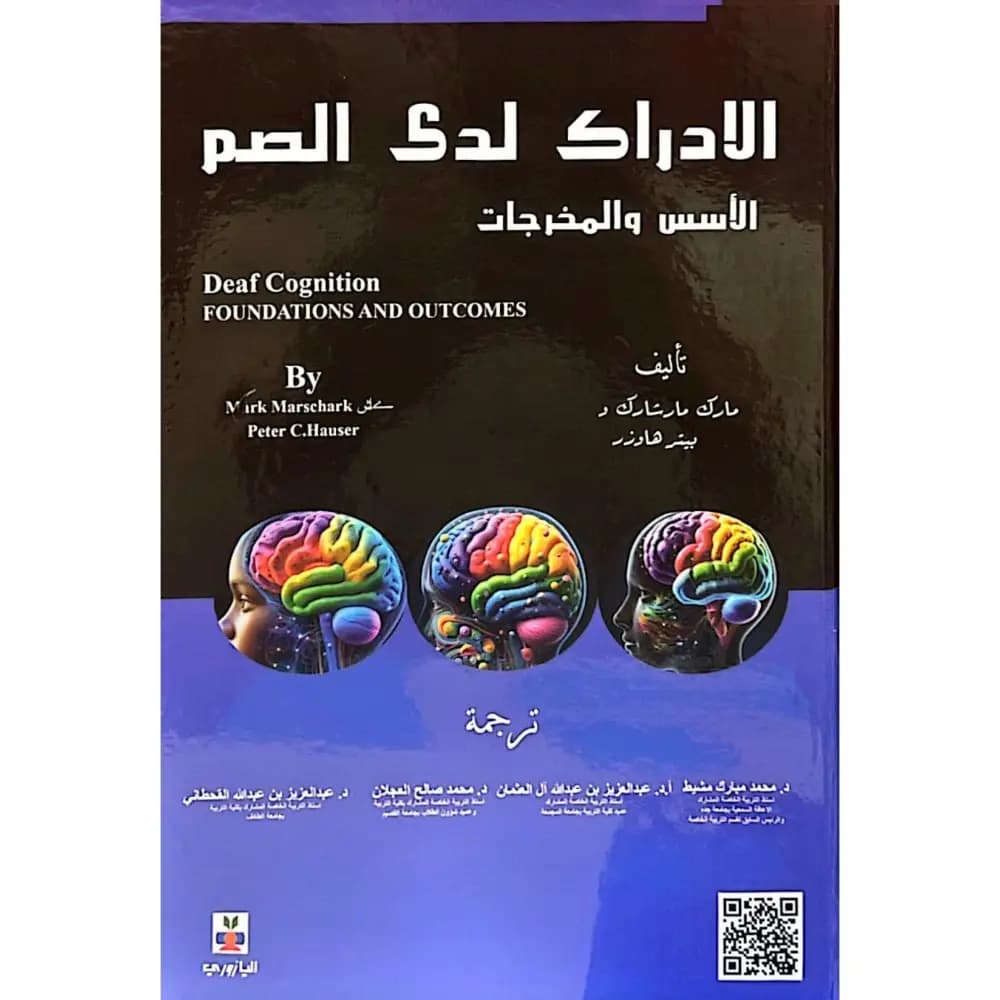
Perception in the Deaf: Foundations and Outcomes - By a Group of Authors
JOD

Get it by 5 Aug | Order in 5 Hours 12 Minutes
- Return Policy
- Warranty Policy
- Shipping Policy
- Non contact delivery
- Personal Receipt
- Return Policy
- Warranty Policy
- Shipping Policy
- Non contact delivery
- Personal Receipt
Despite the long history of Deaf and Hard of Hearing (DHH) individuals making contributions to science and technology (Lang, 1994; Lang & Meath-Lang, 1995), relatively few hold prominent scientific positions today, either in academia or the corporate world. We can cite a limited number of contemporary deaf individuals, at least in America, who are prominent in the world of technology (particularly in telecommunications), but most of these have left their mark on the business side rather than the scientific/developmental side of their fields. One might argue that the situation is a result of 'raising the bar,' and that the level of education required for success in such fields is greater than ever. But this is just an understandable viewpoint, and there is no good reason to believe that current demands are greater than those faced by Guillaume Amontons (1663–1705) or John Goodricke (1764–1786) in their time (Lang, 1994). As our perspective was initially focused on the extent to which there might be special barriers to the participation of DHH individuals in STEM fields, it became clear that most of the possible explanations for the scarcity of their participation were general. As an example, with the 'information explosion' of the late 20th century, the level of reading and writing skills needed for a 'functionally literate' individual seemed to have increased significantly, prompting researchers like Waters and Doehring (1990) to suggest that the eleventh grade was a more appropriate performance level than the traditionally specified fourth-grade level in the United States. However, DHH students continue to face challenges with literacy, with 50% of deaf and hard of hearing children aged 18 in the United States reading at a fourth-grade level or below (Traxler, 2000).
- Weight: 0.7 kg
- Dimensions: 17 x 24 cm
- Author: A Group of Authors
- Cover Type: Paperback (regular)
- Internal Printing: Black
- Number of Pages: 600
- Publisher: Dar Al-Yazouri Al-Ilmiyya
- Publication Date: 2024
- ISBN: 978-9923-43-185-6







