
Download Our App
Shop your way




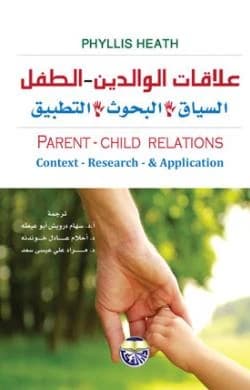
Parent-Child Relationships: Context, Research, Application by PHYLLIS HEATH
JOD

Get it by 5 Aug | Order in 1 Hours 1 Minutes
- Return Policy
- Warranty Policy
- Shipping Policy
- Non contact delivery
- Personal Receipt
- Return Policy
- Warranty Policy
- Shipping Policy
- Non contact delivery
- Personal Receipt
This book provides skills to help therapists, school counselors, alcohol and drug addiction counselors, correctional counselors, psychologists, social workers, nurses, and other helping professionals, enhancing their knowledge of the relationship between children of various ages and parents at different life stages. The book is an easy and practical read, aiming to integrate traditional growth and counseling theories with specific, well-researched strategies and skills related to the problems individuals face. This includes defining development, as an individual starts life as a child and ends as an elder, begins as a son and ends as a grandfather. An individual may have more than one role in life: sometimes a son, other times a father, a caregiver to a grandfather, and then a grandfather himself, with each stage having its unique characteristics.
The contextual approach to parenting, a distinctive feature of this book, emphasizes including historical and cultural perspectives to understand parent-child relationships. We will discuss how these relationships have changed over the past century and the ways contemporary theorists in psychology and childhood educators have shaped these changes. We will also highlight how recent changes in the family (such as increased rates of grandparents as primary caregivers and teenage parenthood) have altered caregiver-child relationships.
Furthermore, we explore parent-child relationships in different ethnic groups both within and outside the country. In addition, theory and research in human development and family relations are interwoven with presentations of cultural and structural variations in the family, a focus that is foundational to most chapters in this book. A discussion drawing attention to how cultural beliefs affect parent-child relationships is presented at the beginning. Since the cultural approach is a key theme, it is essential to understand that there are significant differences and similarities in parent-child relationships across cultures.
We also present a discussion at the beginning of the book about variations in strategy for marital status, sexual orientation, and adult care for children. The goal of examining these similarities and differences in various family arrangements is to increase understanding of the commitment to childcare, which exists in families regardless of the circumstances that brought them together. The initial presentations of cultural and structural variations in families are not meant to stand alone but to lay the groundwork for discussions in each chapter, which will focus on parents and children in the different settings where development occurs. This approach allows students to see how family and cultural variations, gender, and age are related to parent-child interactions at each stage of life.
- By: PHYLLIS HEATH
- Translated by: Prof. Dr. Siham Darwish Abu Eita, Dr. Ahlam Adel Khawandana, Dr. Murad Ali Saad
- Number of Pages: 462
- Year of Publication: 2015
- Binding Type: Paperback
- Edition: First
- Print Color: Black
- Dimensions (cm): 17*24
- Weight (kg): 0.849
- Barcode: 9789957920913







