
Download Our App
Shop your way




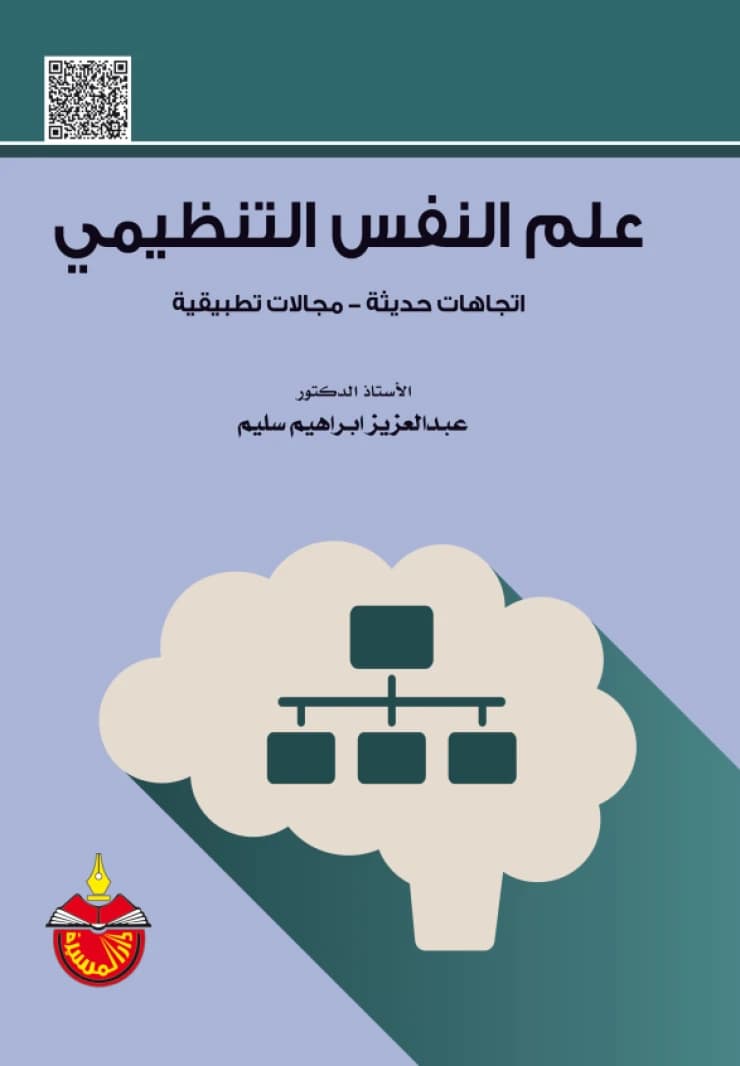
Organizational Psychology - Abdulaziz Ibrahim Salim (2022)
JOD

Get it by 5 Aug | Order in 5 Hours 11 Minutes
- Return Policy
- Warranty Policy
- Shipping Policy
- Non contact delivery
- Personal Receipt
- Return Policy
- Warranty Policy
- Shipping Policy
- Non contact delivery
- Personal Receipt
Interest in Organizational Psychology began as an applied branch of psychology, focusing on applications derived from various psychological sciences within organizations and their effects on human behavior in institutions of all forms and activities. It also addresses modern issues that contribute to the prosperity, growth, and advancement of organizations. Organizational Psychology aims to study human behavior in the workplace through in-depth scientific examination of the social, cognitive, and psychological factors affecting actions and thoughts. Organizational psychologists use their understanding of human psychology to develop effective training programs, resolve workplace conflicts, improve employee morale, and enhance organizational performance.
Organizational Psychology contributes to the success of organizations by improving performance, providing appropriate incentives, and addressing topics such as job commitment, organizational justice, flexibility, and agility, which have emerged strongly due to developments in psychological and administrative studies. It explores how to enhance individual performance within organizations through recruitment practices, training programs, evaluation, and successful management systems.
Recognized as the second-largest subfield in psychology, Organizational Psychology covers two main areas: (a) internal states of individuals related to their jobs (e.g., work motivation, job satisfaction, organizational commitment, organizational flexibility); and (b) effective interpersonal interactions within organizations (e.g., leadership, group behavior, team performance, organizational agility, organizational flourishing). This book strives to contribute a new theoretical perspective to the field of work within educational and other organizations, aiming to highlight and draw attention to new topics in organizational psychology that may benefit researchers, students, workers, and employers, hoping it will be well-received.
Course Objectives (General and Procedural)
The general objective of the course is to introduce the importance of organizational psychology and its psychological, scientific, and educational impact on the lives of organization members. It includes the study of its founding principles, foundations, and multiple theories. The main goal is to help students grasp the theoretical framework of organizational and work psychology and its applications in learning, training, and practical settings.
Procedural Objectives of the Course:
By the end of this course, the student is expected to be able to:
- Recognize the concept, objectives, importance, and scientific and applied experiments of organizational psychology.
- Identify the main topics addressed by organizational psychology.
- Deduce the concept of organizational psychology, its influencing factors, and its fields.
- Discuss the main theories explaining motivation in the field of science, the governing principles of training they suggest, and how to apply them in work and industry.
- Distinguish between different types of work motivations based on their theoretical foundations and applications.
- Identify types of stress in the work environment and how to measure and deal with them.
- Employ various decision-making skills in daily practices in an integrated manner.
- Deduce the roles and traits of an organizational psychology specialist in resisting change.
- Distinguish between change and development in an organization and the methods to achieve them.
- Identify the obstacles to the process of organizational change and development.
- Deduce the most important methods and techniques for resisting change in the organization.
- Discuss organizational leadership with the course instructor in light of its applied implications within the work environment.
- Identify the importance of organizational communication within the work environment.
- Deduce the factors affecting power, conflict, and political behavior in organizations.
- Deduce the nature of mental health in the work environment and ways to achieve it among workers.
- Contribute ideas to enhance worker's mental health through sound educational practices.
Book Content
The author has been keen to present the scientific material in a simple yet profound and engaging manner that helps increase the learner's motivation and adopts an active learning format. Each unit of the course has been provided with:
- Self-assessment questions to help you evaluate your study.
- Practical exercises and applications to enable mastery of the educational material.
- Websites you can refer to for more information.
- Self-assessment tests to evaluate your performance.
This course consists of ten chapters, designed based on a module-based philosophy that focuses on active and self-directed learning. Each chapter represents a complete learning experience that can be taught individually to provide comprehensive coverage of its topic, and which, in its sequence and content, translates the course objectives mentioned above, enabling the learner to understand the importance of organizational and work psychology for both organizational and non-organizational actions:
- Chapter One: Introduction to Industrial and Organizational Psychology.
- Chapter Two: Motivation for Work.
- Chapter Three: Work Stress.
- Chapter Four: Decision Making.
- Chapter Five: Job Satisfaction.
- Chapter Six: Organizational Communication.
- Chapter Seven: Organizational Leadership.
- Chapter Eight: Organizational Development and Change.
- Chapter Nine: Work and Mental Health.
- Chapter Ten: Consumer Psychology and the Psychological Foundations of Marketing.
Prerequisites for Studying This Course
The course author has endeavored to present a contemporary and integrated view of modern organizational psychology, its theoretical interests, and its practical applications, focusing on the nature of organization and management in terms of its determinants, influencing factors, and explanatory theories, while illustrating the applications of these theories in organizational work contexts. It responds to the urgent need to present the course topics in a way that combines simplicity, accuracy, and comprehensiveness. This course is designed to be suitable for teaching organizational psychology to students and as an important academic requirement focusing on organization and management in the work environment within the framework of work and organizational psychology systems, with a focus on measuring and evaluating these practices. Therefore, a student can learn and master the vocabulary of this course without a critical need for prior prerequisites. However, it is preferable for the student to be familiar with any courses related to the scientific method, the philosophy of science, management science, and vocational psychology before studying this course.
Number of Pages: 504
Year of Publication: 2022
Binding Type: Hardcover
Edition: 1
Print Color: Black
Dimensions (cm): 17x24
Weight (kg): 0.950
Barcode: 9789957972073







