
Download Our App
Shop your way




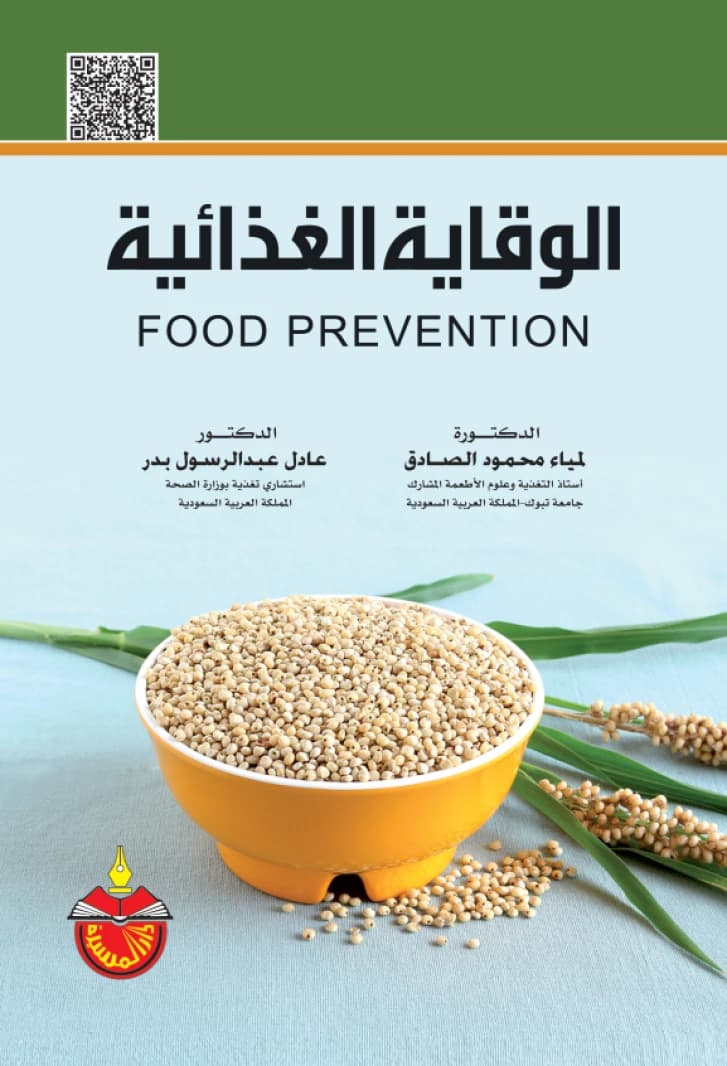
Nutritional Prevention - Lamia Mahmoud Lotfi Al-Sadiq - 2019
JOD

Get it by 5 Aug | Order in 5 Hours 12 Minutes
- Return Policy
- Warranty Policy
- Shipping Policy
- Non contact delivery
- Personal Receipt
- Return Policy
- Warranty Policy
- Shipping Policy
- Non contact delivery
- Personal Receipt
Healthcare is divided into prevention, treatment, and rehabilitation, where we find that prevention is the most powerful form of care for the individual and society. There is a significant difference between letting a person get sick and then seeking treatment, and preventing the illness in the first place. As Imam Ibn al-Qayyim al-Jawziyya said in his book (The Prophetic Medicine): 'Physicians agree that when treatment with food is possible, one should not resort to medicine.'
The principles of preventive medicine were established in Islam over fourteen centuries ago. These foundations came in the form of general teachings, including commands and prohibitions that a Muslim practices, even if unaware of their health benefits, simply in obedience to God's command. As science advanced in the twentieth century, discovering diseases, their causes, germs, and their modes of transmission, some of the amazing health facts and medical wisdom embedded in the timeless Islamic teachings began to be revealed.
History mentions distinguished scholars who spoke about the theory of prevention, such as Ibn Sina (Avicenna), who laid down the methodological foundations, preventive rules, and practical procedures for maintaining health in his book, The Canon of Medicine. He highlighted the fundamental pillars and rules of health prevention in Islam, the factors affecting human health, the causes and modalities of disease, and then discussed the management of prevention and health preservation.
The agricultural area in Egypt has been constant for a long time (only around the Nile River and the Delta). Egypt's population has increased from about 11 million at the beginning of the 20th century (1900) to more than seven or eight times that at the beginning of the 21st century, reaching over 80 million people, and is expected to reach 150 million by 2050. Consequently, the per capita share of agricultural land has gradually decreased, leading to the spread of malnutrition diseases that directly affect individual productivity.
Another consequence is that developed countries suffer from other forms of malnutrition, namely overconsumption without regard to nutritional balance, resulting in diseases such as Obesity, Hypercholesterolemia, Atherosclerosis, Gout, and Diabetes Mellitus.
There is a quiet, undeclared revolution within human souls in general, and Arab and Muslim souls in particular, against chemicals and chemical-based treatments due to their serious side effects on public health and human life. Thus, what is known as alternative or non-chemical medicine has emerged worldwide after it was confirmed that the main cause of modern diseases is food and unhealthy eating habits. 'The stomach is the home of disease,' which clarifies why we emphasize the role of food and nutrition, starting from the seed, its type, selection, the agricultural process itself, fertilization, food storage and preservation methods, then food preparation, how to consume it, and how to treat with it.
Therefore, we will discuss all causes of disease and all therapeutic methods, focusing on nutritional causes and methods of treatment with nutrition and food. It is important to note that each disease has its own specifications and characteristics, so it is necessary to consult a doctor to avoid diagnostic, therapeutic, or dietary errors that could lead to undesirable consequences. The information provided is merely advice for the healthy to prevent disease and for the sick to be cured, God willing, under medical supervision.
If we paid attention to what enters our stomachs in terms of type, quantity, and manner, and followed the Islamic etiquette of eating and drinking, we would not have such a large number of health problems. Poor and unbalanced food over a long period reduces the body's immunity, while healthy and balanced food helps us avoid health and nutritional problems. This does not replace consulting a specialist doctor, as each disease has its own specifications.
The use of food in preventing or treating diseases has been known for centuries, based on beliefs, customs, or traditions without a scientific basis. However, in recent decades, especially the last one, the role and effectiveness of certain chemical compounds in foods in preventing and treating some diseases have been confirmed. Nevertheless, some chemical compounds in foods lack or have no therapeutic effectiveness, and their chronic overconsumption may negatively affect an individual's health. Therefore, we still need more research to understand the long-term effects of these compounds on human body safety.
- Number of Pages: 444
- Year of Publication: 2019
- Binding Type: Hardcover
- Edition: 1
- Printing Color: Black
- Size (cm): 17x24
- Weight (kg): 0.820
- Barcode: 9789957971328







