
Download Our App
Shop your way




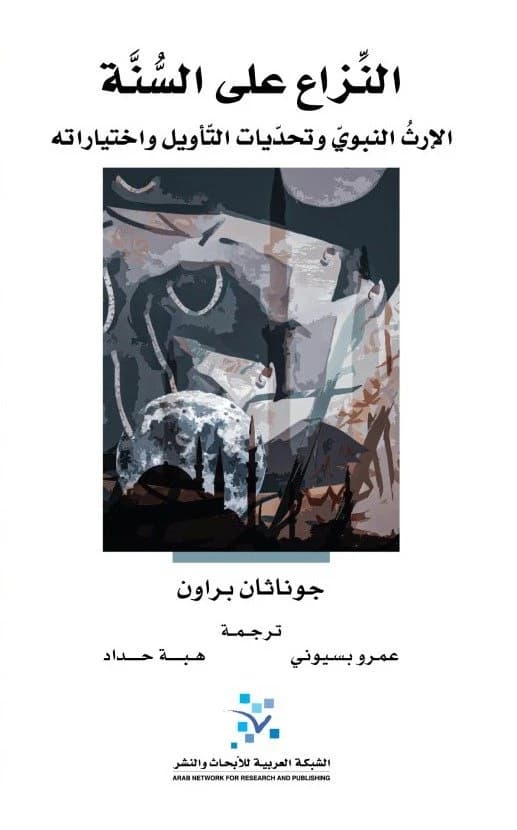
Misquoting Muhammad • Author: Jonathan Brown • 2020
JOD

Get it by 5 Aug | Order in 3 Hours 41 Minutes
- Return Policy
- Warranty Policy
- Shipping Policy
- Non contact delivery
- Personal Receipt
- Return Policy
- Warranty Policy
- Shipping Policy
- Non contact delivery
- Personal Receipt
The thesis of the book, 'Misquoting Muhammad: The Challenge and Choices of Interpreting the Prophet's Legacy,' starts from what the author frames as the 'dispute over Muhammad (peace be upon him).' Since most Quranic principles are general, and even the rulings legislated by the Quranic text required many qualifications, the multifaceted and hard-to-contain conflict returns to the age-old, present, and future issue: the Prophetic Sunnah. It is regarded as a sacred text on one hand, and as the first interpretive code for the Holy Quran on the other.
The book's core idea revolves around the centrality of text in general, and the Sunnah in particular, in the Islamic intellect, whether Sunni or otherwise. This is coupled with the continuous presence of real-world questions and the influence of history on understanding the text, both in ancient and modern times, which has generated a succession of solutions, answers, and interpretations. To trace, analyze, and critique these developments, the author takes the reader on a longitudinal journey from the original Prophetic hadith to the opinions of the Companions and their successors, to Abu Hanifa, Malik, al-Shafi'i, and Ahmad, to al-Bayhaqi and al-Tahawi, to Ibn al-Jawzi and al-Izz ibn Abd al-Salam, to Ibn Taymiyyah, and then to later figures like Ibn Hajar and al-Suyuti, until we arrive at the modern era with al-Dihlawi, the Wahhabis, then Muhammad Abduh, al-Kawthari, Shakir, Abu Zahra, al-Maraghi, Ibn Ashur, Abd al-Halim Mahmud, al-Albani, Ali al-Tantawi, Ibn Uthaymin, al-Qaradawi, and Ali Gomaa, and even Nasr Hamid Abu Zayd, Arkoun, and Shahrour. This is done through historical and sometimes comparative thematic shifts, in broad surveys of Islamic intellectual heritage.
From another perspective, the author adopts a horizontal survey, examining the multiple strata of the Islamic tradition. We encounter legal theorists like al-Juwayni and al-Ghazali, hadith scholars like al-Daraqutni and al-Bayhaqi, theologians like the Mu'tazila and al-Ash'ari, and philosophers like Ibn Sina and Ibn Rushd. We see traditionalist madhhab followers, those outside the tradition, and even the Shia. We explore reformists like Ibn Taymiyyah, al-Dihlawi, and even Muhammad al-Ghazali and al-Qaradawi. With the Sufis like Ibn Arabi, al-Sha'rani, and al-Nabhani, we stand with the Quranists in Pakistan, the school of modernists like Fazlur Rahman, the modern skeptics in Egypt (Sidqi and Abu Rayya), and postmodernists like Nasr Hamid Abu Zayd. We examine the official traditional discourse of Al-Azhar and Zaytuna, new preachers, and modernity's discourse on terrorism, women, and the family in the West and America, and its reflection in cinema and the arts. All these voices present their readings on Islam, history, reality, and the prospects for the future.
Author: Jonathan Brown
Translation: Amr Basiony and Haya Haddad
Publisher: The Arab Network for Research and Publishing
Year of Publication: 2020
Number of Pages: 495
Number of Parts: 1
Binding Type: Paperback
ISBN: 9786144312049







