
Download Our App
Shop your way




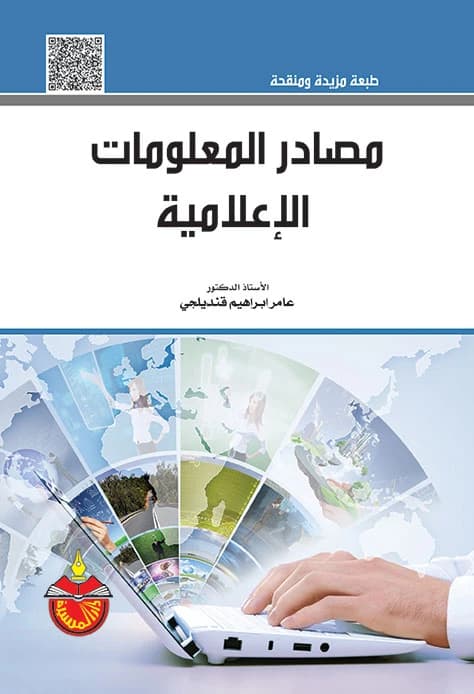
Media Information Sources - Amer Ibrahim Qandilji - 2025
JOD

Get it by 5 Aug | Order in 3 Hours 30 Minutes
- Return Policy
- Warranty Policy
- Shipping Policy
- Non contact delivery
- Personal Receipt
- Return Policy
- Warranty Policy
- Shipping Policy
- Non contact delivery
- Personal Receipt
Information in general, and media information in particular, along with its uses in light of various developments, is considered a fundamental basis for journalists and media professionals in writing their reports. Information plays the role of the primary, inexhaustible driver for the growth and development of media work. Media information also clearly and directly influences the formation and crystallization of cultures in different human societies. This book aims to contribute to the growing body of knowledge, through its various institutions that rely, or should rely more, on information and derive their strength from the rapid developments in information technology.
The author addresses various topics within the context of media information. Chapter One is dedicated to the concept and nature of information, its definition, as well as defining media, information sources, data, and knowledge. Chapter Two deals with the importance of information, as our era is called the Information Age. Chapter Three is devoted to the types of information and the different approaches to classifying it. Chapter Four is dedicated to printed paper information sources such as books, periodicals, theses, encyclopedias, dictionaries, and biographies. Chapter Five focuses on other information sources that media writers and researchers can use, such as interviews, questionnaires, eyewitnesses, and news agencies. Chapter Six is allocated to other complementary and important information sources, like the internet, and information banks and networks.
Chapter Seven covers the criteria for using information in media work and the general rules required to verify its credibility. Chapter Eight is dedicated to the use of information in media work and the necessary requirements for writing a good media report. Chapter Nine discusses standards for using information, rules for verifying its credibility, strategies for enhancing truthfulness, and objectivity in writing. Chapter Ten is devoted to legal liability, copyright, and intellectual property rights. Chapter Eleven is assigned to the use of computers in storing and retrieving information. The final chapter, Chapter Twelve, focuses on the relationship between the media professional and information sources, the required qualities of a good media writer, and their evaluation of information and its sources.
At the end of each chapter, the author has included a set of questions covering the chapter's content, as well as a list of approved sources and references. Each chapter also includes a set of diagrams and figures that the author deemed necessary and illustrative.
- Number of Pages: 424
- Year of Publication: 2025
- Binding Type: Hardcover
- Edition Number: 3
- Printing Color: Black
- Size (cm): 17x24
- Weight (kg): 0.800
- Barcode: 9789957067519







