
Download Our App
Shop your way




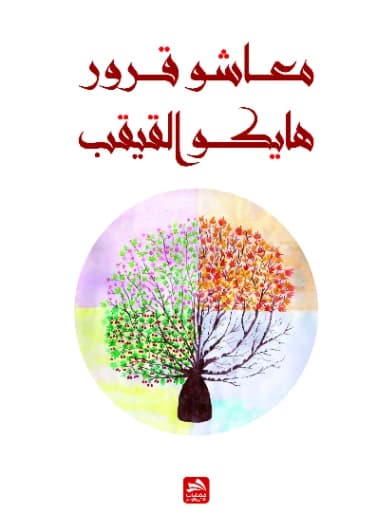
Maple Haiku - Maashou Grour - 2017 - Dar Fadaat
26.4
JOD

Get it by 5 Aug | Order in 5 Hours 20 Minutes
- Return Policy
- Warranty Policy
- Shipping Policy
- Non contact delivery
- Personal Receipt
- Return Policy
- Warranty Policy
- Shipping Policy
- Non contact delivery
- Personal Receipt
Sold by
Dar Fadaat For Publishing
A book of poetry, its first edition was published in 2017 by Dar Fadaat. It contains 132 pages in Arabic.
- There is no writing style like the haiku in capturing the fleeting moment, and even elevating its status with every passing wonder.
- The haiku is the ruler for capturing the scenic and taming its wonder.
- The scenic is to capture the beauty of that safe truce the earthworm will enjoy, following the clamor of the white bird, merely by the crack of the whip in the open air, and then its return to devour it: [Following the whip's crack - the white bird's clamor, the earthworm enjoys.]
- The haikuist should read the tales of Zen, which inspire methods of sound thinking in the unthought-of.
- With the logic of a meditating ascetic, the haikuist can possess the poet's slip of the tongue, and experience has proven the haikuist's right to own the painter's perspective of the beings around them.
- Despite the topographically narrow geography of the haiku, in the space it commands with its three lines, it aligns with the audio-visual arts.
- This open horizon to the artistic effect allows for a response to the aesthetics of the four seasons (the Kigo), even if its signals are hidden from the instrument of interpretation.
- The ordinary reader cannot perceive the simplicity of the poetic moment in a haiku unless their balance of grasping the meaning from the first reading is disturbed. The depth of the idea holds multiple open-ended significations.
- Reducing the excess of metaphor and allegory that the Arabic language thrives on increases and deepens the clarity of the idea that crowns the philosophy of the haiku.
- A haiku is to stop the metaphor in front of the coachman's carriage as it passes by without riding it.
- The transition from the recitative to the pictorial is the major obstacle that will face the Arabic haiku.
Author: Maashou Grour
Publisher: Dar Fadaat
Year of Publication: 2017
Recommanded products
By clicking the SUBSCRIBE button, you are agreeing to our Privacy & Cookie Policy If you want to unsubsribe the marketing email, please proceed to our privacy center.
Discover Your Path








© 2005-2026 ICN. All Rights Reserved.