
Download Our App
Shop your way




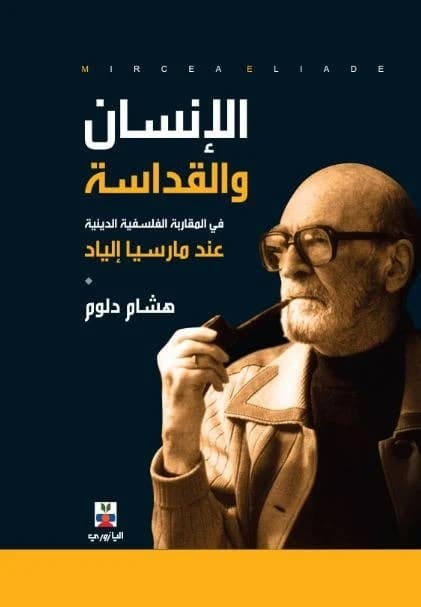
Man and Sanctity - A. Hisham Dalloum
JOD

Get it by 5 Aug | Order in 3 Hours 35 Minutes
- Return Policy
- Warranty Policy
- Shipping Policy
- Non contact delivery
- Personal Receipt
- Return Policy
- Warranty Policy
- Shipping Policy
- Non contact delivery
- Personal Receipt
Since his earliest beginnings, man has believed in the existence of a world transcendent to his worldly existence, envisioning this metaphysical, transcendent world as the controller of his destiny and being. Man thus proceeded to bestow all manifestations of sanctity, sublimity, and reverence upon that world. He strove to build pathways that would serve as portals to connect with that celestial, upper world, relying on myths, rituals, symbols, and offerings in the hope of partaking in its sanctity, sheltering in its power, living by its efficacy, and gaining insight from its manifestations, or in the form of divine revelation according to religions.
The sacred emerged as an inevitable product of the nature of humanity's relationship with that celestial world. It was believed that the sacred is not a fixed attribute in things; rather, it was described as a secret gift that bestows magic and majesty upon whatever it settles on. The result: awe, fascination, reverence, and fear for its being. Thus, the sacred was described as a power of might and concealment, untamable and indivisible. In light of this, man had to feel awe towards it, hoping for its good or fearing its punishment. Man established a mechanism to regulate his relationship with the sacred, which often appeared in the form of rituals, relying on symbols as a path and myth as a tool.
The idea of the sacred did not only cast its shadow on the belief system of ancient man, as many assume. Its effects extended to his way of life, clothing, worldview, and his perception of time and space. The division of life into certain ranks, time into specific cycles, society into different classes, and even places were affected by this distinction between the ordinary and the sacred. The very idea of history was suspended; there was no longer a place for personal, linear history. Instead, the primary concern was cyclical history, seeking origins and sources, based on emulating past models rather than creating new ones.
This book explores Mircea Eliade's philosophical-religious approach to the idea of sanctity and its relationship with man, especially since Eliade's research came in a time described as devoid of sanctity. This absence of sanctity encompassed all aspects of life and extended to the worldview, modes of knowledge, and value systems. Eliade did not just chronicle the idea of the sacred but rather presented a reading of the effects that the acts of those who negate sanctity have on human life, particularly after the rising calls to restore the existential being of man, who has become alienated from himself due to the overwhelming materialism and mechanism prevalent in the modern world. In this context, Eliade sought to re-establish a place for the phenomenon of sanctity, aiming to address the various fateful human problems related to human existence, its future, and its daily questions, thereby introducing a new element to sanctity.
- Weight: 0.55 kg
- Dimensions: 17 x 24 cm
- ISBN: 978-9957-12-763-3







