
Download Our App
Shop your way




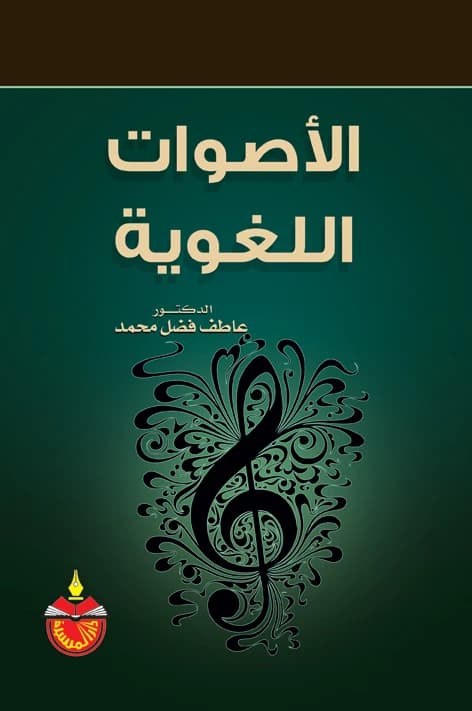
Linguistic Phonetics - Atef Fadl Mohamed - 2013
JOD

Get it by 5 Aug | Order in 0 Hours 40 Minutes
- Return Policy
- Warranty Policy
- Shipping Policy
- Non contact delivery
- Personal Receipt
- Return Policy
- Warranty Policy
- Shipping Policy
- Non contact delivery
- Personal Receipt
Linguistic studies in Arabic are numerous, their paths are diverse, and scholars' views on them vary—sometimes converging, other times differing, and occasionally intersecting, depending on each researcher's approach to linguistic study. Since ancient times, linguists have been preoccupied with linguistic sounds, making serious attempts in this field. However, these attempts did not achieve the level of precision, mastery, and accuracy reached by scientists today, but they ultimately remain the initial seeds from which modern linguists grew. Phonetic observations from the Greeks, Romans, and Indians have been reported, forming the foundation upon which modern phonetics was built. Firth states that the English school of phonetics only emerged in the nineteenth century on the shoulders of the information provided by William Jones about Indian grammarians and phoneticians. The ancients—Greeks, Romans, Indians, and Arabs—classified sounds into voiced and voiceless according to the proximity or distance of the vocal cords. Valuable observations were found in Sibawayh's work, which divides sounds into three categories: plosives, fricatives, and approximants. Highly precise and well-structured phonetic works were also produced, including 'Kitab al-'Ayn' by Al-Khalil ibn Ahmad al-Farahidi, Sibawayh's 'Al-Kitab', 'Sirr Sina'at al-I'rab' by Ibn Jinni, and a treatise on the causes of the production of letters by Ibn Sina, among others. We must not forget the role of Quranic recitation scholars, who made phonetic additions to what was transmitted from Al-Khalil and Sibawayh.
This book was written to be an introduction or a gateway to the science of Arabic phonetics for university students, those who come from school to the Arabic language department at the university having heard little to nothing about phonetics, their knowledge being minimal, if not zero. Therefore, it is a textbook or a course that provides students with an introduction to phonetics, not a specialized, detailed book on the subject. If we were to go into detail, we would need entire books on the various topics, branches, and specifics of this science, and it is conceivable that a separate book could be written on each جزئية (component).
The book includes an introduction, a historical overview, and several chapters:
- Chapter One - General Introduction to Phonetics: Covers the concept, status, subject, importance, branches, methods of phonetics, and the efforts of ancient Arabs in phonetic studies.
- Chapter Two - Articulatory Phonetics: Includes its concept, topics, the speech apparatus, its organs, and their description.
- Chapter Three - Phonetic Laws: Discusses the law of assimilation and the law of dissimilation.
- Chapter Four - The Syllable: Covers its concept, importance, forms, and characteristics.
- Chapter Five - The Phoneme: Details its origin, types, markers, importance, and the phoneme vs. the allophone.
- Chapter Six - Segmental (Syntagmatic) Phonemes: Includes the classification of linguistic sounds, the phonetic system of Arabic, and the articulatory positions of vowels.
- Chapter Seven - Non-Syntagmatic Phonemes: Covers stress, intonation, and juncture.
The book also features appendices containing:
- Phonetic terminology.
- Tables of phonetic ordering according to Al-Khalil, Sibawayh, Ibn Jinni, and Ibn Sina.
- A general introduction to the most famous ancient Arab phoneticians.
- Solved and unsolved exercises aimed at training students and assessing their progress and comprehension of the subject.
Book Details:
- Number of Pages: 232
- Year of Publication: 2013
- Binding Type: Cardboard Cover
- Edition Number: 1
- Printing Color: Black
- Dimensions (cm): 17x24
- Weight (kg): 0.600
- Barcode: 9789957069414







