
Download Our App
Shop your way




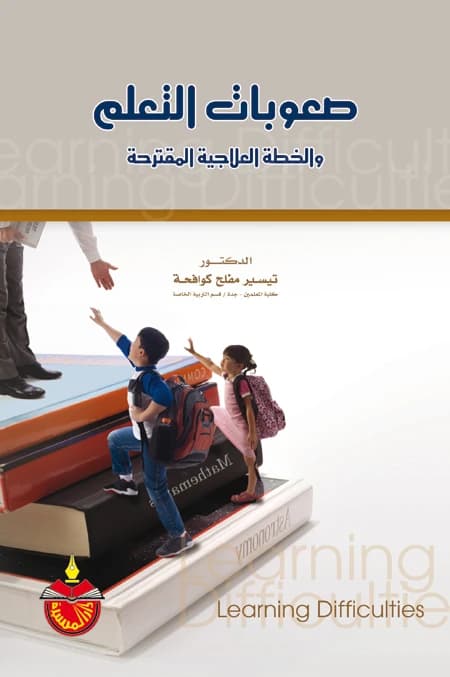
Learning Disabilities and the Proposed Treatment Plan - Tayseer Mufleh Kawafha - 2011
JOD

Get it by 5 Aug | Order in 3 Hours 11 Minutes
- Return Policy
- Warranty Policy
- Shipping Policy
- Non contact delivery
- Personal Receipt
- Return Policy
- Warranty Policy
- Shipping Policy
- Non contact delivery
- Personal Receipt
The topic of learning disabilities is relatively new in the field of special education, where the focus was previously on other forms of disabilities such as intellectual, auditory, visual, and motor impairments. However, with the emergence of a group of children who are otherwise normal in their cognitive, sensory, and motor development but suffer from learning problems, specialists have begun to focus on this area. The goal is to identify the manifestations of learning disabilities, especially in academic, motor, and emotional aspects.
The field of learning disabilities has occupied parents, educators, and researchers in special education, as it involves studying the distinct characteristics of a large segment of school students. It aims to understand the nature of the difficulties they face and the most suitable therapeutic and teaching strategies to alleviate these challenges as much as possible. These difficulties can be specific, appearing when a student fails in skills related to success in a particular subject like reading, writing, or arithmetic. They can also be general, appearing when a student fails in skills related to success in more than one subject, where their performance rate is below the normal or expected level for an average student.
The danger in learning disabilities lies in their being 'hidden difficulties.' Individuals with learning disabilities are usually typical in appearance, and teachers or parents may not notice any unusual signs requiring special intervention. Consequently, teachers might label them as lazy, indifferent, or unintelligent. The natural result of such practices is repeated failure and, eventually, dropping out of school.
What these students need is a suitable learning environment, adequate academic support, and appropriate individual care to address their strengths, focus on and reinforce them, and minimize their specific areas of weakness. This approach helps teach them the essential skills they need, in addition to learning strategies or methods that will help them progress in their studies according to their actual abilities. The treatment for a student's learning disability begins as soon as it is discovered and identified as affecting their academic achievement. Therefore, the success or failure of educational programs depends on the attitudes of classroom teachers, their competence, and the support they receive.
- Number of Pages: 200
- Year of Publication: 2011
- Binding Type: Hardcover
- Edition: 4
- Printing Color: Black
- Size (cm): 17x24
- Weight (kg): 0.500
- Barcode: 9789957062040







