
Download Our App
Shop your way




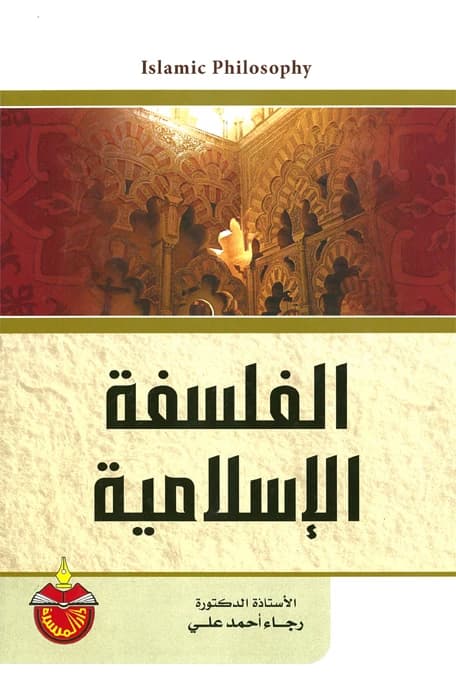
Islamic Philosophy - Rajaa Ahmed Ali (2012)
JOD

Get it by 5 Aug | Order in 3 Hours 51 Minutes
- Return Policy
- Warranty Policy
- Shipping Policy
- Non contact delivery
- Personal Receipt
- Return Policy
- Warranty Policy
- Shipping Policy
- Non contact delivery
- Personal Receipt
Before discussing the factors that led to the emergence of Islamic philosophy, we must first answer an important question: Is it Islamic philosophy or Arabic philosophy? It is worth noting that a debate has arisen over the naming of this philosophy left to us by Muslims. Although this problem did not exist before the nineteenth century and did not cross the minds of its proponents—perhaps because they did not need to assert their identity, as they were the masters of the world and their main concern was the term 'philosophy' itself—the issue emerged during the collapse of the Islamic Caliphate and the search for a lost identity. The region came to be called either the Arab region or the Middle East, and they preferred it to be called Arab. Furthermore, the first to call it Arabic philosophy were the Levantines, for political reasons related to breaking away from the Ottoman Empire, which represented the Islamic Caliphate. Thus began the disagreement over whether it was Islamic or Arabic, with opinions divided between supporters and opponents of each term, each with their own arguments and reasons.
Those who argue for "Arabic" believe this naming avoids any misunderstanding of our philosophy and distances us from corrupt interpretations, as evaluating a philosopher's ideas would be from a religious perspective if we called it Islamic philosophy. Proponents of this view also highlight several points: 1. The Islam that influenced this philosophy is an Arab religion, its Quran is Arabic, its Messenger is Arab, and its spirit is Arab. 2. Calling it Islamic philosophy would compel you to include all that Muslim philosophers wrote in their various languages such as Persian, Indian, Turkish, and others. 3. This philosophy is not the fruit of the ideas of Muslims alone, as Nestorians, Jacobites, Jews, and Sabians contributed to its formation. 4. This philosophy is written in the Arabic language.
As for the other opinion, which favors the term "Islamic," proponents such as Sheikh Mustafa Abdel Raziq, Al-Ahwani, Ibrahim Madkour, and others argue that it is Islamic philosophy for one important reason: Islam is not just a religion but a religion and a civilization. These studies (philosophy), despite their diverse sources and the varied backgrounds of those who engaged in them, were undoubtedly influenced by and linked to Islamic civilization. We do not say it is Arabic in the sense that it is indebted to the Arab race alone; reality itself shows that Islam brought under its banner various peoples and multiple races who contributed to its intellectual movement. Moreover, if we say it is Arabic because it was written in Arabic, this would mean excluding great works written by Muslim philosophers like Ibn Sina in non-Arabic languages. It is Islamic because they lived (even if they were not Muslims) under the umbrella of Islamic civilization. In addition, ancient historians called it Islamic philosophy and its philosophers the philosophers of Islam, as was the practice of al-Shahrastani, al-Qifti, al-Bayhaqi, and others. Its people gave it a name they agreed upon, and it is not right to deviate from it.
A final word remains in this debate: whether this philosophy is called Arabic or Islamic, one thing is certain—it was written in Arabic and originated in an Islamic environment. It is, therefore, an Arabic philosophy with an Islamic character or an Islamic philosophy written in Arabic. In any case, this should not be a point of contention. There should be more important things to research in this philosophy. This was a contentious issue for historical reasons, and it is futile for this or that name to stir up conflict, as it is a manifestation of an old chauvinism from which their scientific life was, as much as possible, free. Islam abhors chauvinism in all its forms.
- Number of Pages: 296
- Year of Publication: 2012
- Binding: Paperback
- Edition: 1
- Printing Color: Black
- Size (cm): 17x24
- Weight (kg): 0.600
- Barcode: 9789957068356







