
Download Our App
Shop your way




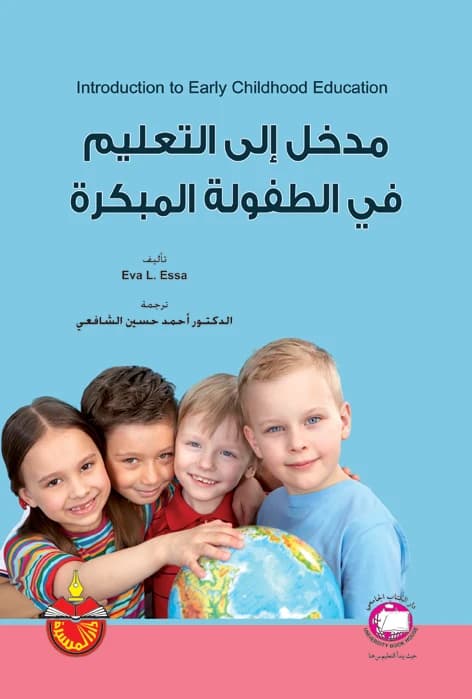
Introduction to Early Childhood Education - Eva L. Essa
JOD

Get it by 5 Aug | Order in 3 Hours 14 Minutes
- Return Policy
- Warranty Policy
- Shipping Policy
- Non contact delivery
- Personal Receipt
- Return Policy
- Warranty Policy
- Shipping Policy
- Non contact delivery
- Personal Receipt
Embark on an enjoyable journey with this book. The field of early childhood education is rich and rewarding for the serious, dedicated individual—like you—who aims for excellence in working with young children. By the end of the course you take by reading this book, you will have a great deal of knowledge about young children, many components of quality early childhood programs, and you will learn about the role of the early childhood specialist educator.
What can you expect while reading this book?
Who is this book for? This text is intended for in-service and future professionals who wish to learn more about early childhood education. This book covers working with children from infancy to the age of eight. It includes information on infant and toddler programs, preschool programs, and special programs for pre- and post-primary school stages for young children. A notable aspect of this book is its relevance to both teachers and caregivers of young children. It is also suitable for those working in other areas of early childhood education programs such as program implementers, parent educators, curriculum coordinators, staff training consultants, and others.
Philosophy: This book is based on the philosophy that the most important task of an early childhood educator is to provide an effective and supportive program for the growth of young children. In a child-centered program—where children are allowed to experiment—the guidelines are clear and logical, activities are planned to meet the individual needs of children in a group, and adults are consistent and loving, thus children thrive. A good early childhood experience can contribute immensely to helping children become responsible individuals who care for and show concern for others. This philosophy is reflected throughout the pages of the book in all chapters and topics.
Content: This book is divided into six parts comprising sixteen chapters. The purpose of these six parts is to answer the following questions: "What is early childhood education?", "Who is involved in early childhood education?", "Why is early childhood education important?", "Where does early childhood education take place?", and "How is early childhood education conducted?". These questions are important as you gain insight into all aspects of early childhood education. Throughout the sixteen chapters, you will learn a lot about the field of early childhood education and why we need it (Chapter 1), you will learn about the children, families, and teachers involved (Chapters 2-4), you will learn about the history that led to the field as it is today in terms of its theoretical rationale and how theory can be translated into quality program models (Chapter 5), aligning goals and topics and assessing progress towards meeting them (Chapter 6), the importance of the physical environment as a place to implement programs (Chapter 7), scheduling and curriculum planning (Chapter 8), curriculum content in terms of supporting children's physical, cognitive, linguistic, and social growth (Chapters 9-13), guiding individual children's behaviors, including dealing with problem behaviors (Chapter 15), and helping children cope with stress in their lives (Chapter 16). These chapters will help you learn a great deal about the essential components of early childhood education and working with young children.
Features of this book: Once you start using this book, you will notice some of its features, designed to help you learn the material as comprehensively and effectively as possible. As you navigate through it, you will notice that the page layout has the main text on two-thirds of each page and marginal notes on the remaining third. You should pay attention to the outer part of each page, as it contains helpful features. You will find three types of information here.
- Definitions: Important definitions of concepts introduced in the book are placed in the page margin. When you see a new term discussed in the text, you will find it written in bold, and then its definition is placed in the margin nearby. This will help you reinforce concepts and easily learn the important terminology used in the field of early childhood education. It will also be useful to know that all definitions appear again in alphabetical order at the end of the book under the list of key terms.
- Key Points: The margin also contains the main points of the book. At the beginning of important sections and subsections, you will find a one or two-sentence summary that captures the key point of that section.
- Key Questions: Finally, some important questions are noted in the margin to help you consider the information you are reading and explore its relevance. Some key questions suggest activities that will help you learn more about the topic. Your instructor may also suggest activities related to the key questions.
Product Details:
- Number of Pages: 554
- Year of Publication: 2013
- Binding Type: Hardcover
- Edition: 1
- Print Color: Black
- Dimensions (cm): 17x24
- Weight (kg): 1.000
- Barcode: 9999999991011







