
Download Our App
Shop your way




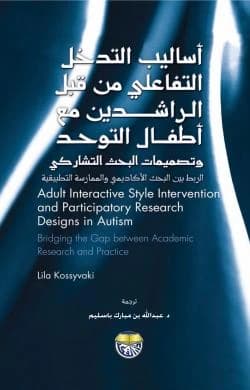
Interactive Intervention Methods by Adults with Autistic Children and Participatory Research Designs by Lila Kossyvaki
JOD

Get it by 5 Aug | Order in 3 Hours 14 Minutes
- Return Policy
- Warranty Policy
- Shipping Policy
- Non contact delivery
- Personal Receipt
- Return Policy
- Warranty Policy
- Shipping Policy
- Non contact delivery
- Personal Receipt
Writing a comprehensive description of a study in an engaging style for the general reader is extremely difficult. This book reflects the author's passion for communicating the findings of her groundbreaking doctoral research in an accessible and scientifically beneficial way for a wide range of specialists. I hope that teachers and others will take interest in the changes Dr. Lila Kossyvaki and her team used to communicate with some severely autistic children, and be encouraged to try the approaches she designed in their own activities. Undoubtedly, Lila Kossyvaki has provided all the information anyone would need to try the interactive adult intervention method for themselves. I highly recommend this book to anyone interested in enhancing communication in children with autism.
Regardless of their cognitive and linguistic abilities, individuals with autism often struggle to develop the essential communication skills necessary for full control over their environment and maintaining independence. In light of her own pioneering research, 'Interactive Intervention by Adults and Participatory Research Designs with Autism' reviews the impact that the interactive style of neurotypical individuals can have on the spontaneous communication of autistic children. This book serves as a clear and detailed guide on how to conduct research with autism in real-life settings such as schools and homes. Kossyvaki provides critical evaluations of a vast number of relevant case studies and focuses on several methodological issues that researchers are likely to face when conducting studies of this complex nature. The author takes the reader on a tour through the existing literature on the importance of spontaneous communication and the atypical way this component develops in autism, before presenting the results of her own studies on how the interactive styles of neurotypical individuals can affect the spontaneous communication of people with autism.
This book is an essential resource for academics, researchers, and postgraduate students in the fields of special educational needs, autism, research methods, and educational and clinical psychology.
- Author: Lila Kossyvaki
- Translator: Dr. Abdullah bin Mubarak Basleem
- Number of Pages: 272
- Year of Publication: 2019
- Binding Type: Hardcover
- Edition: First
- Print Color: Black
- Dimensions (cm): 17x24
- Weight (kg): 0.578
- Barcode: 9789957922092







