
Download Our App
Shop your way




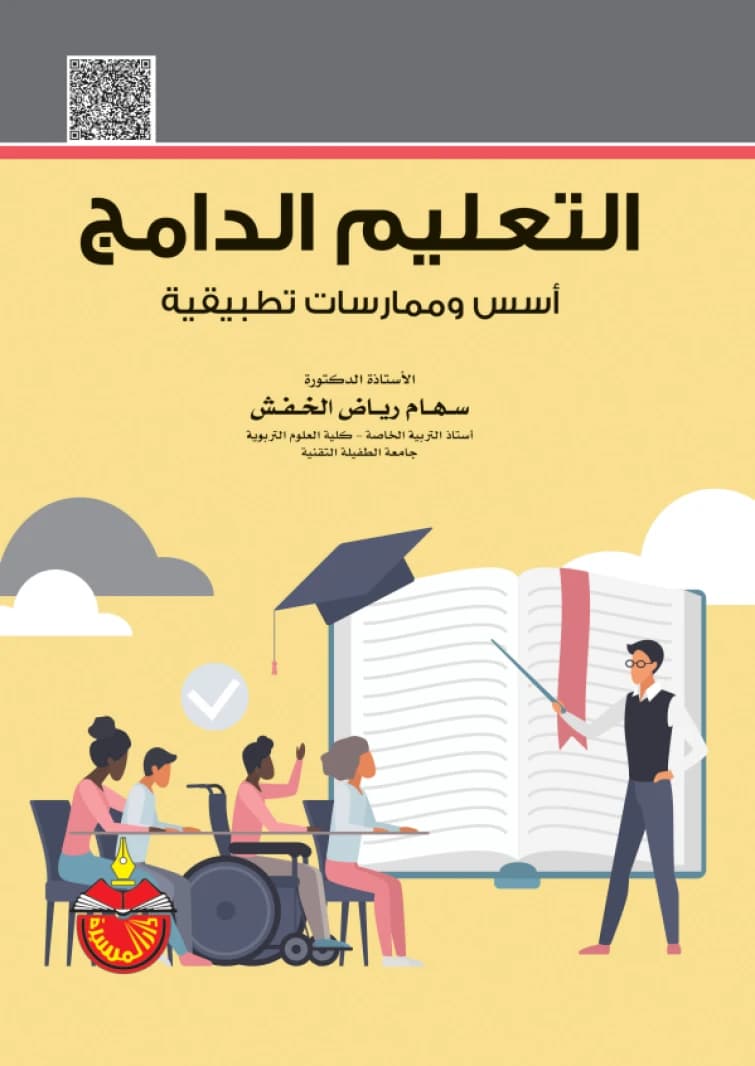
Inclusive Education: Foundations and Applied Practices - Dr. Siham Riyad Al-Khafsh
JOD

Get it by 5 Aug | Order in 3 Hours 47 Minutes
- Return Policy
- Warranty Policy
- Shipping Policy
- Non contact delivery
- Personal Receipt
- Return Policy
- Warranty Policy
- Shipping Policy
- Non contact delivery
- Personal Receipt
This book provides a comprehensive and in-depth vision of the concept of inclusive education, presenting it as an approach based on the principles of equity, justice, and inclusion. It views human diversity not as an obstacle, but as a rich opportunity for shared learning and collective growth. It is aimed at everyone interested in education, including teachers, parents, researchers, and policymakers, with the goal of offering an integrated scientific reference that combines theory and practice, enhancing their understanding of issues related to inclusion and effective methods for its real-world implementation.
Within these pages, a range of fundamental topics that contribute to understanding inclusive education are presented, starting from the historical development of the concept and its educational and social importance, through the legislative and human rights foundations that support it, to the mechanisms of its implementation within schools. The book also includes a thorough analysis of global and Arab educational policies in the field of inclusion, highlighting effective practices, common obstacles, and the best ways to overcome them.
This book presents comprehensive and integrated concepts about inclusive education, offering a theoretical and practical framework for building an inclusive educational system based on scientific principles, international experiences, and successful classroom practices. The book consists of nine chapters, with each chapter addressing a pivotal aspect of inclusive education as follows:
- Chapter One: The Concept of Inclusive Education - This chapter covers the theoretical and philosophical foundations of inclusive education, explaining its definition, justifications, and the legislative basis it rests on, in addition to comparing it with traditional education, presenting international conventions, its core principles, and the ten-year strategy in this field.
- Chapter Two: Applying Inclusive Education - This chapter reviews the forms and models of inclusive education, the requirements for its application at the educational and institutional levels, explains the foundations of its success, the roles of the working team, the obstacles to its implementation, and how to overcome them, with a presentation of inclusive education practices inside classrooms.
- Chapter Three: Early Intervention and Inclusive Education - This chapter explores the fundamental relationship between early intervention and inclusive education, clarifying basic definitions, justifications for early intervention, and its beneficiaries, in addition to presenting the role of the multidisciplinary team, highlighting the most benefited groups such as those with autism spectrum disorder, intellectual disabilities, and hyperactivity, among others.
- Chapter Four: Classroom Environment and School Organization - This chapter focuses on how to organize the learning environment in inclusive classrooms, presenting teaching strategies for students with different disabilities, in addition to assessment in inclusive education, and the role of building inclusive schools with their material, human, educational, and legal requirements, and the supportive policies to ensure success.
- Chapter Five: Teaching Strategies in Inclusive Classrooms - This chapter includes a set of effective teaching strategies suitable for inclusive classrooms, such as differentiated instruction, cooperative learning, technology-based education, project-based learning, formative assessment, and peer tutoring, among other methods that focus on the student and their individual needs.
- Chapter Six: Roles in Inclusive Education - This chapter discusses the different roles in the inclusive education system, starting from the family, then teachers (general and special education), to the school principal, and official government bodies such as ministries of education, health, and social development, in addition to universities, media, and the local community.
- Chapter Seven: Curricula and Assessment in Inclusive Education - This chapter addresses how to adapt curricula to suit everyone, discusses the challenges facing assessment in an inclusive environment, appropriate assessment tools, the role of the student and family in the assessment process, with a presentation of assessment models that support inclusion and multidisciplinary support teams.
- Chapter Eight: Dealing with Student Behaviors - This chapter addresses strategies for managing student behaviors in inclusive classrooms, presenting common behaviors such as aggression, hyperactivity, withdrawal, and verbal repetition, analyzing their causes, and explaining therapeutic and educational intervention methods to deal with them.
- Chapter Nine: Inclusive Education in the Future - This chapter discusses future trends for inclusive education, the most important expected developments in policies, curricula, and technology, and presents a set of key terms that enhance a comprehensive understanding of the concept of effective inclusion in light of contemporary educational transformations.
In light of all the above, this book provides a practical educational reference for teachers, school leaders, decision-makers, and researchers to develop an inclusive educational system that upholds human rights and meets the needs of all learners. I invite the reader to critically engage with the content of this book, and for this work to be a starting point for dialogues and initiatives that contribute to building truly inclusive schools that respect the humanity of every child and believe that every individual has a place in the classroom, a voice in the discussion, and an opportunity to learn.
- Number of Pages: 240
- Year of Publication: 2026
- Binding Type: Paperback
- Edition: 1st
- Printing Color: Black
- Size (cm): 17x24
- Weight (kg): 0.500
- Barcode: 9789957972523







