
Download Our App
Shop your way




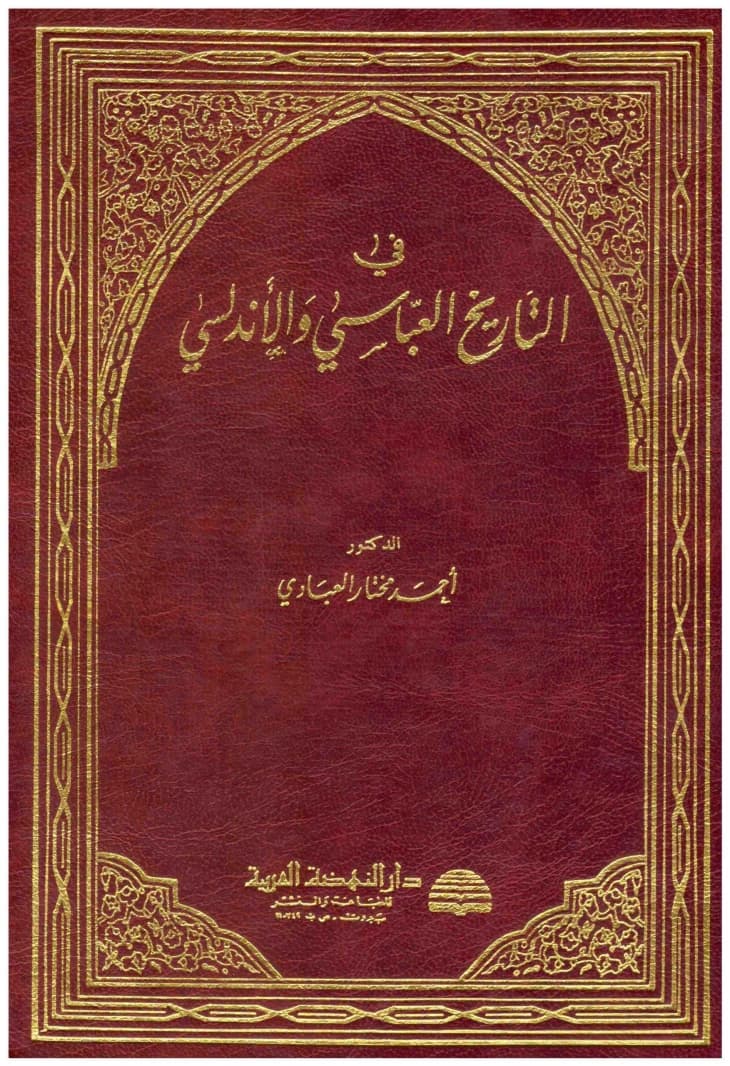
In Abbasid and Andalusian History
JOD

Get it by 5 Aug | Order in 5 Hours 17 Minutes
- Return Policy
- Warranty Policy
- Shipping Policy
- Non contact delivery
- Personal Receipt
- Return Policy
- Warranty Policy
- Shipping Policy
- Non contact delivery
- Personal Receipt
This book 'In the History of Morocco and Andalusia' presents lectures by Dr. Ahmed Mokhtar Al-Abadi, delivered to students in Alexandria, Ain Shams, Rabat, and Arab Beirut universities. Readers will observe that the Islamic world in the East and West is a historical unity despite geographical distances and political and sectarian differences. The political rivalry between the Abbasids in Baghdad and the Umayyads in Cordoba did not prevent their cultural, civilizational, and economic impact.
The lecturer's interest in the political history of these regions was connected to a comparative study of the interrelation and exchange between Islamic peoples, their cultures, systems, and civilizations. The book follows the traditional division of medieval history, starting with the Abbasid history. It discusses the rise of the Abbasid state, its achievements, reasons for its decline, the Abbasid call and its phases, and general features of the new state.
The second chapter focuses on the caliphs of the first Abbasid era and their political and urban efforts, emphasizing the role of individual characters in directing the policies of this intellectual era in the Abbasid state's history. The third chapter, or the so-called second Abbasid era, addresses the Turkish dominance over the Abbasid caliphate, resulting in independence movements forming independent states on the eastern and western edges, such as the Tahirids, Saffarids, Samanids, Ghaznavids in the East, and the Tulunids and Ikhshidids in Egypt and the Levant.
This political fragmentation weakened the Abbasid caliphate, which fell under the control of the Shiite Buyid dynasty for a century, known by historians as the third Abbasid era. The fourth chapter of the book includes this era. The fifth and final chapter discusses the Turkish Seljuk state and the emergence of independent principalities in the Levant, the Jazira, Iraq, and Persia, known as the Atabegs. This era is termed as the fourth Abbasid era, concluding the Abbasid state's history.
The second part of the book, focused on Andalusian history, is also organized traditionally into six chapters. It begins with a general introduction to the Maghreb and Andalusia, followed by the Arab conquest of these lands, the governors’ era, and then the Umayyad state's era in two parts: the emirate and the caliphate. It covers the end of this state and its fragmentation into weak taifa states threatened by destruction. The topic concludes with the entry of the Moroccan hero and Almoravid leader Yusuf ibn Tashfin into Andalusia, saving it from imminent fall after his victory over the Spaniards at the Battle of Zalaca in 1086.
- Author: Ahmed Al-Abadi
- Publisher: Dar Al-Nahda Al-Arabiya - Beirut
- Pages: 580
- Parts: 1
- Binding: Artistic hardcover
- Paper type: White
- Printing colors: Single color







