
Download Our App
Shop your way




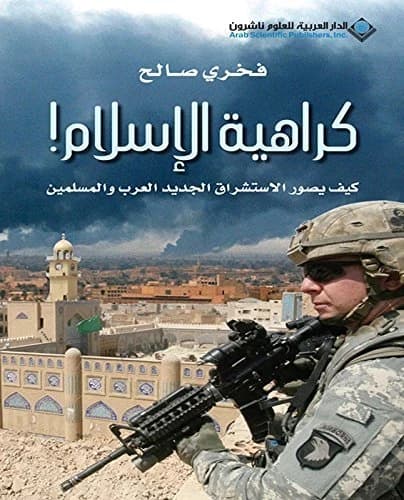
Hatred of Islam
JOD

Get it by 5 Aug | Order in 0 Hours 41 Minutes
- Return Policy
- Warranty Policy
- Shipping Policy
- Non contact delivery
- Personal Receipt
- Return Policy
- Warranty Policy
- Shipping Policy
- Non contact delivery
- Personal Receipt
In the introduction to his book 'Hatred of Islam', author Fakhri Salih seeks to explain how modern orientalism depicts Arabs and Muslims, whether through ideas and theories or policies and how they are managed. This is done in light of the current developments and challenges in the Arab and Islamic world. Fakhri Salih provides a unique perspective in this book, distinct due to the circumstances and context, since every event undoubtedly reshapes the map of meaning in orientalism and creates new dynamics that alter the understanding language or value system, also affecting power relations and the rules of the game. According to the author, the book attempts to trace a form of representing Islam that aligns with the American empire's goals in the 21st century to serve its interests, achieving dominance and maintaining political and economic control worldwide, endorsing its unique polarity in global politics. To clarify further, the author divided the content into three sections: The first section examines the works of British-American orientalist Bernard Lewis, exploring the roots of his oriental view on Islam and Muslims in some of his early writings, focusing on his key articles from the 1990s, which the author believes laid the groundwork for the political shift in America adopting the war on terror as the strategy used by George Bush Sr. and Jr. administrations to enter the era of American dominance. The second section was dedicated to exploring Samuel Huntington's theory of the clash of civilizations, as presented in his famous 1993 article, which the book titled itself after in 1996, to reveal - as stated - the fallacy of the theory, showing that Huntington's writings were merely an attempt to create a strategic perception that decision-makers could use and promote to justify past and future wars. This is followed by a summary of the comments published by Foreign Affairs magazine on the article twenty years after its publication, including criticism, reviews, and the controversial reactions it provoked.







