
Download Our App
Shop your way




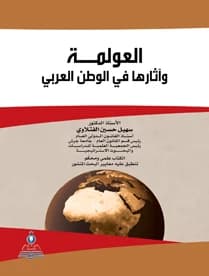
Globalization and its Effects on the Arab World by Prof. Dr. Suhail Hussein Al-Fatlawi
JOD

Get it by 5 Aug | Order in 5 Hours 11 Minutes
- Return Policy
- Warranty Policy
- Shipping Policy
- Non contact delivery
- Personal Receipt
- Return Policy
- Warranty Policy
- Shipping Policy
- Non contact delivery
- Personal Receipt
Globalization is the phenomenon of our age, having enveloped the entire world. It is an economic, political, social, and environmental system that has encompassed all facets of life. It is a natural outcome born from the capitalist system, extending its influence over its supporters and opponents among nations and peoples alike.
The effects of globalization extend to all peoples and countries worldwide, including the nations that created and exported it, such as the United States of America. Multinational corporations control the fate of humanity in rich, developing, and poor countries alike. Material relations have replaced human relations, changing the structure and goals of state institutions, directing them toward specific paths, and altering humanity's way of life and its social and human connections.
Considering that globalization is an existing and imposed reality on the world, and that peoples have no choice but to accept it—given that it entails both positive and negative effects—developed countries utilize their capabilities and coordinate their positions to benefit from the positives of globalization and eliminate its negatives. For this reason, European and other developed nations possess a foundational immunity and have coordinated with their counterparts to confront the negative impacts that globalization brings.
- ISBN: 9789957164461
- Weight: 0.700 kg
- Dimensions: 17×24 cm
- Paper: White
- Pages: 368
- Year of Publication: 2011
- Binding: Hardcover







