
Download Our App
Shop your way




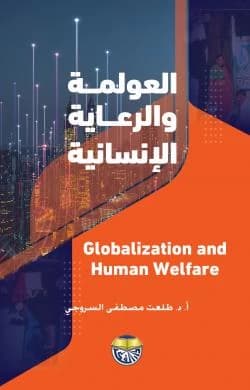
Globalization and Humanitarian Care by Professor Dr. Talaat Moustafa Al-Srouji
JOD

Get it by 5 Aug | Order in 5 Hours 11 Minutes
- Return Policy
- Warranty Policy
- Shipping Policy
- Non contact delivery
- Personal Receipt
- Return Policy
- Warranty Policy
- Shipping Policy
- Non contact delivery
- Personal Receipt
Globalization is a historical process and an extension of the global system. It is a continuous economic, cultural, political, and technological movement that supports and deepens interaction and mutual dependence. In recent years, it has caused ongoing and rapid changes in the global village across various fields. The term globalization literally refers to the process of transforming local or regional phenomena into global ones. It can also be described as a process that enhances the interconnectedness of the world's people within a single community, encouraging joint efforts and cooperation to accelerate development and improve the quality of human life. The term is derived from 'world' (عَالَم). Just as thinkers have been divided between supporters and opponents, they have also differed in its definition. However, there is a near-universal agreement that it involves giving the entire world a single, comprehensive identity that includes all its inhabitants, unifying their economic, social, and intellectual activities without regard to differences in religion, culture, nationality, or ethnicity. This process represents the sum of economic, political, social, cultural, and technological forces. The term is often focused on economic globalization—the integration of national economies into a global economy through trade, foreign direct investment, capital flows, unrestricted migration and travel, and the spread of modern technology, media, and its remarkable techniques. Globalization also encompasses a wide range of processes that de-nationalize state control, which weakens their entity, power, and consequently, their responsibilities in providing social care to their citizens.
- Author: Professor Dr. Talaat Moustafa Al-Srouji
- Number of Pages: 248
- Year of Publication: 2023
- Binding: Paperback
- Edition: First
- Print Color: Black
- Dimensions (cm): 17x24
- Weight (kg): 0.42
- Barcode: 9789957922764







