
Download Our App
Shop your way




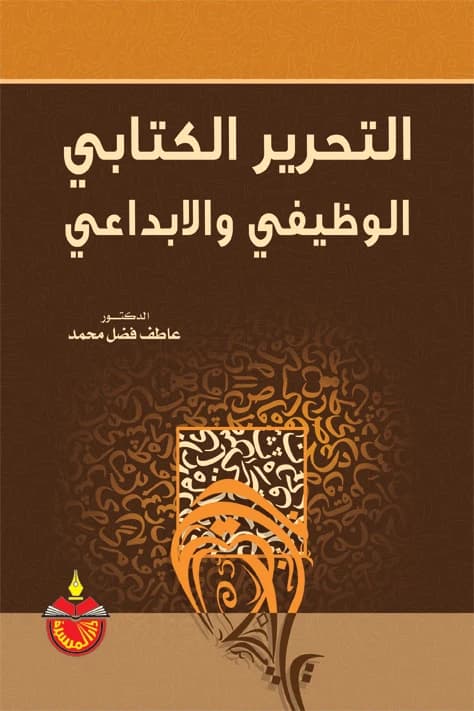
Functional and Creative Writing - Atif Fadl Muhammad
JOD

Get it by 5 Aug | Order in 3 Hours 20 Minutes
- Return Policy
- Warranty Policy
- Shipping Policy
- Non contact delivery
- Personal Receipt
- Return Policy
- Warranty Policy
- Shipping Policy
- Non contact delivery
- Personal Receipt
The word "tahrir" (editing/liberating) comes from the verb "harrara," which in the Arabic lexicon revolves around the meanings of freeing and releasing. As for "kitaba" (writing), it is the verbal noun of "kataba." To write something means to inscribe, copy, and record it. Writing is a craft performed with words conceived in the writer's mind, depicting meanings existing within the self through a pen that outlines the internal image, making it tangible and visible. From both the linguistic and idiomatic significations, we see a clear and complete harmony between the words "editing" and "writing." This harmony leads to the liberation of meanings and ideas from the mind, to be expressed in various ways according to purposes and needs. As stated by Ibn Khaldun: "Calligraphy and writing are human crafts, consisting of drawn shapes and letters that indicate the audible words which in turn indicate what is in the soul."
The purpose of writing is to convey the writer's ideas and opinions to others, who are the other party in the linguistic communication process. Writing is not a fleeting whim or a sudden reaction; it is a permanent, authentic, and continuous inclination that leaves an impact on readers because it is the result of thought, struggle, knowledge, and culture. It gives life to static words dormant in souls, minds, and dictionaries before they are arranged on paper. A piece of literature is the result of a difficult intellectual labor.
The importance of writing is highlighted by its role as one of the most vital communication skills, connecting a person with others. Through it, one transcends the boundaries of time and place. It is also a means of preserving human heritage. Al-Jahiz said: "Were it not for recorded books and preserved histories... most knowledge would be lost, the dominion of forgetfulness would vanquish the dominion of memory, and people would have no refuge for recollection. If that happened, we would be deprived of most benefits." Writing is a vessel that holds within it every experience and every piece of wisdom of a nation. It preserves the unity of a nation, regardless of the differences in time and place, circumstances, and occasions. Another of its significances is that it introduces the younger generation to the masterpieces of Arab intellectual production, which provides them with limitless spiritual energy, fostering pride in themselves and their glorious history. It also allows them to encounter writings that contributed to building a global human civilization, and subsequently to emulate these writings to raise a generation that forges its own path in scientific and cultural life.
This book is presented with two dimensions, functional and creative, with the aim of:
- Training budding students to begin writing without apprehension.
- Helping students adapt to various life situations that require different forms of functional expression, such as applications, report writing, official letters, and academic CVs, among other life demands. It is painful to see a university student sitting on a chair under an umbrella in front of a man—who might have only an elementary or at best a high school education—to fill out a passport or ID form for them!
- Enabling students to express their ideas, emotions, and feelings, and to reveal their literary creativity, so that from them may emerge short story writers, novelists, poets, playwrights, and writers of reflections, essays, and more.
- Accustoming students to sound thinking, organizing ideas, and presenting them with complete clarity.
In terms of skills, the book aims to:
- Emphasize that the Arabic language is an effective means of communication with others, and to expand the use of proper Arabic in speaking and writing.
- Cultivate the student's taste for precision in thought and expression, teaching them that the value of words lies in the meanings they achieve, and developing their ability to express themselves in writing with a clear and sound style.
- Motivate the student towards innovation and creativity in literary arts in general, and in one art in particular, to become a specialist. One cannot become a specialist or a writer without combining two important means: study on one hand, and thinking on the other. Study without thinking cannot lead to correct understanding, and thinking without study cannot safeguard against error.
- Develop the student's ability to perceive the aspects of beauty in the Arabic language—in its grammar and structures like presentation, delay, and omission; in its rhetoric like imagery and simile; and in its semantics, orthography, morphology, and derivation.
Undoubtedly, the rules of grammar, morphology, and spelling are very important in writing. Therefore, it was necessary to include a chapter on these issues. This chapter focuses on the functional aspect, selecting common or important topics for the language user in the writing process—both creative and functional—or those that can be applied in various fields. The goal of these topics is to help the student with correct expression, proper pronunciation, good reading, mastering styles, understanding their meanings, and their connection to the correctness of meaning, steering clear of turning them into rigid rules, mental exercises, and controversial examples shrouded in ambiguity and complexity. These topics are presented in an easy, simplified manner, avoiding tedious lengthiness and disruptive brevity, because the goal is for the tongue to be free from errors in speech and the pen from mistakes in writing, which is a primary and noble objective.
The book consists of nine chapters, each leading logically to the next. The first chapter discusses language in terms of its origin, definitions, importance, characteristics, and functions. The second chapter discusses the elements of construction for a written topic: the stages of the writing process, motivations for writing, elements of the topic, and its linguistic structure. The third chapter discusses the elements of a literary work: its nature, elements, ideas, emotion, imagination, and rhythm. The fourth chapter discusses the concept of literary and scientific (reportorial and expressive) style. The fifth chapter discusses writing in terms of its origin, subjects, tools, and principles. The sixth chapter discusses problems in writing: difficulties facing the writing skill, issues of spelling and punctuation, common errors in language and grammar, and dictionary use. The seventh chapter covers prose writing arts, including objective or functional prose arts like invitations, applications, reports, administrative letters, meeting minutes, and academic CVs. Then it covers creative artistic prose arts like reflections, essays, short stories, stories, novels, plays, biographies, memoirs, research, and summaries. We have ensured that these chapters include selected practical examples to help the student understand how to write, followed by a set of training activities for the student to apply what they have learned. Thus, the book combines theory with practice.
Number of Pages: 448
Year of Publication: 2014
Binding Type: Paperback
Edition: 2
Printing Color: Black
Dimensions (cm): 17x24
Weight (kg): 0.850
Barcode: 9789957068813







