
Download Our App
Shop your way




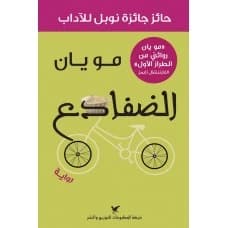
Frogs by Mo Yan
JOD

Get it by 5 Aug | Order in 3 Hours 42 Minutes
- Return Policy
- Warranty Policy
- Shipping Policy
- Non contact delivery
- Personal Receipt
- Return Policy
- Warranty Policy
- Shipping Policy
- Non contact delivery
- Personal Receipt
"In China, a good writer does not enter into direct conflict with the regime. Criticism of society is often hidden behind the story, behind the language."
In an atmosphere of magical realism, this latest novel by Mo Yan addresses the subject of China's family planning policy—the one-child policy that remained in effect until 2015, replaced in 2016 by the two-child policy. "Auntie," Mo Yan's protagonist, is a village midwife who took on the role of enforcing birth control during the Cultural Revolution, pursuing pregnant women for forced abortions. "Tadpole," the narrator, opens the novel with a letter to his Japanese novelist mentor, informing him that he is writing a play based on his aunt's life. Between "Auntie's" story and "Tadpole's" play, the lives of thousands of Chinese villagers are narrated. The reader is introduced to Chinese culture and one of the most significant and sensitive issues in modern China, while simultaneously being transported to a fantastical, strange world where the croaking of frogs rises and spirits are breathed into statues.
"The villagers used to say that whoever buys a child statue sculpted by 'Hao of the Big Hands,' ties a thin red string around its neck, and offers it gifts, will be blessed with a child who resembles the small statue in every way. However, one was not allowed to choose the pottery child. When you went to buy a statue, he would study you carefully, then his hand would delve in to finally give you the statue he chose for you. If you found the doll wasn't beautiful, he wouldn't exchange it, as if to say: 'Are there parents in the world who complain about their children's ugliness?'. So, you would look more closely at the details of the child he gave you, and little by little, you'd find it attractive. Over time, people became convinced that buying one of his clay statues was equivalent to asking for a real child."
This is a novel that raises the deepest ethical questions, dealing with Mao's and post-Mao China, and fills your soul with the laughter of children. A novel that will be read for generations to come.
- Publisher: شركة المطبوعات للتوزيع والنشر
- Number of Pages: 540
- Year of publication: 2018







