
Download Our App
Shop your way




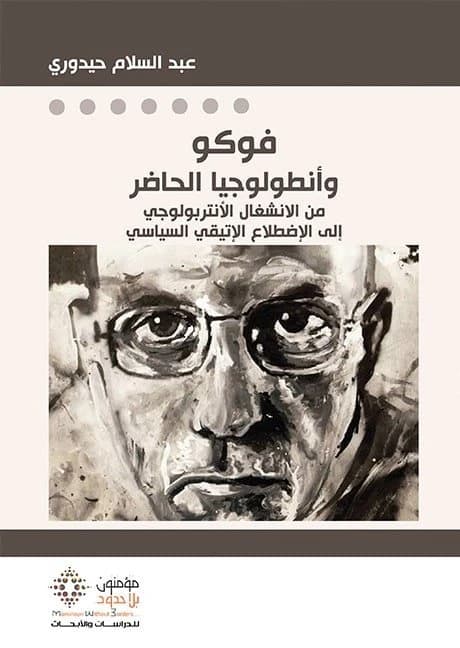
Foucault and the Ontology of the Present • Author: Abdelsalam Hidouri • 2017
JOD

Get it by 5 Aug | Order in 3 Hours 6 Minutes
- Return Policy
- Warranty Policy
- Shipping Policy
- Non contact delivery
- Personal Receipt
- Return Policy
- Warranty Policy
- Shipping Policy
- Non contact delivery
- Personal Receipt
Foucault and the Ontology of the Present: From Anthropological Concern to Ethico-Political Engagement.
The philosophical question with Foucault is a question of the present; a question of who we are at the moment we ask these questions. It is the question of actuality. Do Foucault's analyses help us understand the present and foresee the future? Do his analyses need revision and reconsideration? It is a new way of thinking differently, concerned with the self's reflection on its complex connections with knowledge, power, and ethics, in light of the establishment of an ontology of the present as the culmination of Foucault's philosophical project, and the problematic connections it, in turn, poses with modernity, revolution, and resistance of all kinds.
The field of history transforms into a domain for philosophizing that breaks with the return of fixed categories and metaphysical certainties, transcends the concepts upon which theories of knowledge were based, deconstructs reality, and undermines identity; that is, it moves beyond history in its traditional sense to excavate the hidden archives that constitute historical, social, and cultural knowledge structures.
Returning to Foucault today enables us to reinterpret his work in light of our own Arab cultural heritage, paying attention to our own objects, ideas, expectations, and stakes within our Arab-Islamic cultural climate. This climate has contained, and still contains, taboos that cannot be discussed with a critical spirit except in whispers, where any free thought is judged by religious standards in the name of the sacred; indeed, thinking itself is deemed heretical under the banners of monotheism and the arts of killing.
- Publisher: Mominoun Without Borders for Studies and Research - Beirut
- Year of Publication: 2017
- Number of Pages: 204
- Binding Type: Paperback
- ISBN: 9786148030505







