
Download Our App
Shop your way




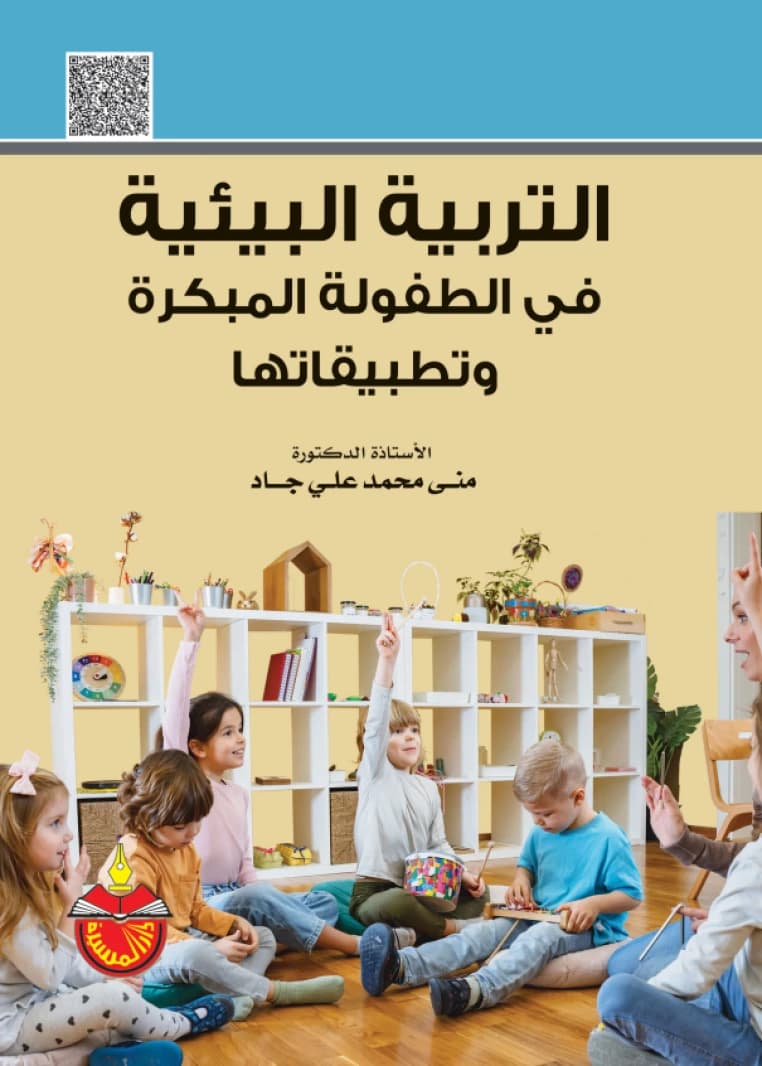
Environmental Education in Early Childhood and Its Applications - Mona Mohamed Gad
JOD

Get it by 5 Aug | Order in 3 Hours 9 Minutes
- Return Policy
- Warranty Policy
- Shipping Policy
- Non contact delivery
- Personal Receipt
- Return Policy
- Warranty Policy
- Shipping Policy
- Non contact delivery
- Personal Receipt
The topic of environmental education is one of the most important subjects that kindergarten teachers, as well as parents responsible for guiding and shaping children's behavior, should be familiar with. The environment is the home of life, and the first thing humans must do to preserve life is to protect the environment. Since humans are the biggest influence on the environment, whether negatively or positively, protecting it requires a proper understanding of all its elements, components, resources, and mutual interactions, alongside serious collective action to protect this environment and ensure its continuity as a viable home for life.
The problem of environmental protection began to emerge clearly in the modern era, as before this time, the environment was capable of repairing any damage caused by humans. Humans have not stopped harming the environment they live in and by. This phenomenon is intertwined with indifference and selfishness, i.e., with the components and manifestations of negative human behavior.
Previously, due to the relatively small scale of human-inflicted damage, the environment could quickly repair what humans had spoiled, to the extent that people became indifferent to their actions, relying on its restorative capacity. People found internal or external migration to be a solution to the problem of their corrupted environment. Today, however, migration is severely restricted by many regulations, and the extent of environmental corruption has grown, magnified, and become so frequent that the environment's ability and speed to repair the imbalance are insufficient.
This imbalance occurs as a result of introducing new factors, increasing the proportion of an existing factor, or significantly reducing another, leading to a disruption of the ecological balance and environmental degradation harmful to life, as the foundations of the environment deteriorate. While it is one in its essence, each aspect reflects its effects on the others.
Confronting the problem of environmental conservation is a responsibility on the shoulders of educators in all positions and stages—parents, teachers, media outlets, the press, and others. With their influential power in shaping and developing human behavior, tackling the issue of environmental preservation comes through an environmental education that provides individuals with information, knowledge, and environmental concepts, and builds a set of habits, skills, attitudes, and values that positively guide their behavior to achieve environmental conservation.
Environmental education, especially for preschoolers, has become an urgent necessity to face the environmental problems caused by human mismanagement. This book, primarily aimed at kindergarten teachers, parents, and those interested in raising preschool children in the community, covers the following topics: preparing the child for social life; the preschool child between family, society, environment, and education; the kindergarten as an educational environment; building the content of the educational experiences program for kindergartens and environmental education; the most important methods for environmentally educating the preschool child; and the main methods for grouping and distributing children in environmental education activities. The book concludes with a set of proposed model activities for environmental education in early childhood.
- Number of Pages: 382
- Year of Publication: 2024
- Binding Type: Hardcover
- Edition: 8
- Printing Color: Black
- Size (cm): 17x24
- Weight (kg): 0.700
- Barcode: 9789957062422







