
Download Our App
Shop your way




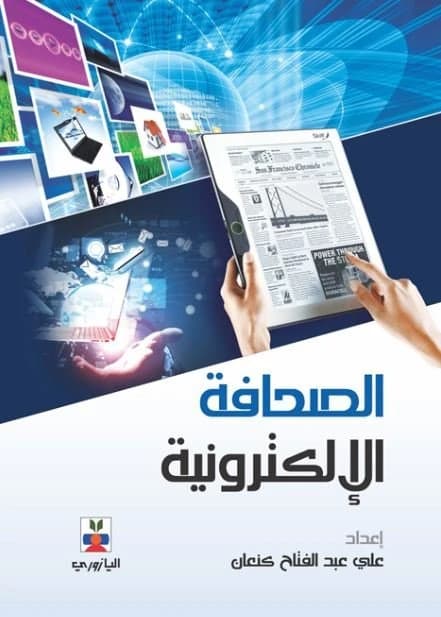
Electronic Press - Ali Abdel Fattah
JOD

Get it by 5 Aug | Order in 5 Hours 8 Minutes
- Return Policy
- Warranty Policy
- Shipping Policy
- Non contact delivery
- Personal Receipt
- Return Policy
- Warranty Policy
- Shipping Policy
- Non contact delivery
- Personal Receipt
The sources of knowledge multiply with the progress of civilization, and its springs in this era are more abundant than before. Schools, institutes, and libraries have multiplied, all spreading literature and science and combating ignorance and illiteracy. However, each of these resources is specific to a number of students who, though many, are but a part of the nation. The majority would remain—were it not for the press—devoid of what spreads culture, develops their awareness, and informs them of the conditions of their age and the events of their time.
The press fills a great gap in this regard, as it reaches the hands of the merchant, the scholar, the writer, the gardener, the farmer, and the laborer. All of them read its contents of politics, literature, and science. If it is true and valuable, the nation's progress and eminence increase. If it is false, the journalist commits a great crime against the nation by poisoning minds, killing spirits, and deceiving the community. Therefore, the journalist in this era has the greatest impact on the public. It is—as the esteemed Professor Mr. Habib Al-Obaidi says—an eloquent interpreter between the people and the government. And it is, as I see it, a necessity for a democratic system, because one of the characteristics of this system is the cooperation between the people and the government in steering the state safely between the tyranny of the individual and the chaos of the masses.
Newspapers enlighten the nation and guide it, for the community does not possess the insight into itself and its affairs to distinguish the false from the true and right from wrong. It also lacks the incentive that drives an individual to seek benefit for himself and ward off harm. Thus, it needs a guide to inform it of the government's conditions and present its actions, the benefits and harms of which ultimately fall upon the nation. In this way, a free press becomes a shackle on the government's neck—stronger and more beneficial than parliamentary councils. And what a fine shackle it is that guides rulers to the right path.
Its virtue is not limited to this aspect alone; it has a much greater and more beneficial hand in what it presents of the fruits of intellect and the products of minds. It opens their insight, refines their spirit, and expresses what stirs in their hearts and crosses their minds. In my view, the function of the press in this regard is more significant and critical than its political mission, as the latter is a consequence of the former. I can hardly imagine a nation devoid of the distinctions of sciences and arts that then cares for its freedom and independence. The advantage of the press in its mission—both political and educational—is to educate the people, develop their perceptions, and cultivate their senses. Therefore, it can achieve what no other source of education can, for others are specific while this is general, like the difference between a great river that waters cities and villages and a small stream, even if its water is purer and clearer.
The press must, therefore, be careful in choosing its intellectual nourishment and not allow deception into its work. Just as the press has this effect on the public, the public also influences the press. Or rather, it directs it, as the journalist, for the sake of their newspaper or magazine's popularity and circulation, must consider the public's taste and write what they demand. Otherwise, they will turn away from reading it, and the newspaper will not be able to continue its path and will cease its efforts and work. In this respect, the press is a mirror of the people, and every nation gets the newspapers it deserves. But a journalist is not just a photographer; they are also a teacher and an educator. With their skill, wisdom, and acumen, they can elevate the community and help it ascend the ladder of development and perfection.
However, if a journalist stoops in their writing to the level of their audience's perception—including the common person who is only slightly above the illiterate—offering them only what they already know and every trivial, shallow thing that is of no use, then they become like a parrot, or even more misguided. Yes, the journalist should deliver their message to the largest number of people in the nation, and for that, they must understand the different classes and address people according to their intellect. But this is one thing, and lowering culture to the level of the common people is another. Otherwise, development would cease, and what need does a nation have for a newspaper that offers nothing new, does not develop its mentality, or cultivate its faculties?
The public's influence on the newspaper should not be understood as a call for its trivialization and decline, but rather for meeting its needs and being sincere in its leadership. This means that the public's reception of a newspaper is proportional to its sincerity in serving them and its dedication to their benefit. It is no jest, then, that the press is called the Fourth Estate of the state and nicknamed 'Her Majesty'. But what is a jest and a farce is when it is run by those who are not its masters, who misuse it and treat it as a mere business before it is a principle and a struggle. Just as some sellers cheat with their goods and mislead their customers, and just as there are thieves of money, thieves of knowledge, and thieves of literature, so too are there journalists who have adopted deception and theft as a profession and a motto. The difference is that journalist thieves or journalist cheaters are a greater calamity, a greater evil, and a more heinous crime. This is due to the status of the press we mentioned, and its role as a guide for the nation, removing its confusion and ambiguity and opening its eyes to truth and guidance.
- Weight: 0.65 kg
- Dimensions: 17 x 24 cm
- ISBN: 978-9957-12-587-5







