
Download Our App
Shop your way




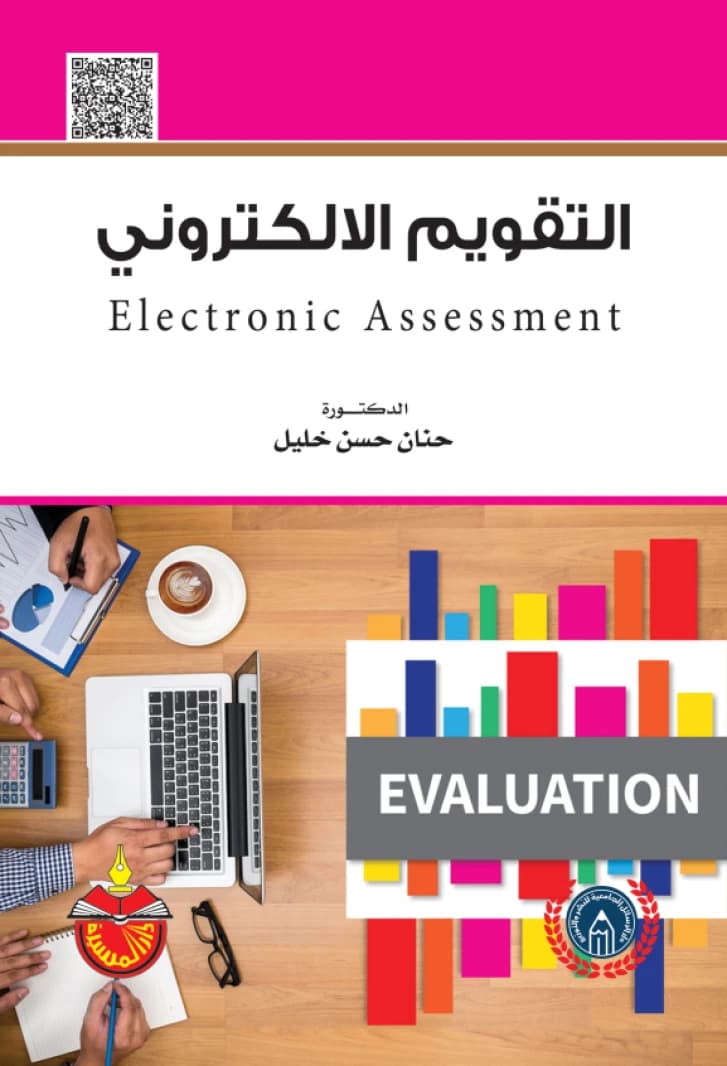
Electronic Assessment - Dr. Hanan Hassan Ali Khalil
JOD

Get it by 5 Aug | Order in 3 Hours 57 Minutes
- Return Policy
- Warranty Policy
- Shipping Policy
- Non contact delivery
- Personal Receipt
- Return Policy
- Warranty Policy
- Shipping Policy
- Non contact delivery
- Personal Receipt
Scientific and technological development and the emergence of modern e-learning technologies have generated diverse interests among various educational institutions. E-learning has become a tool to confirm student learning, and the effectiveness of this tool can be verified through good electronic assessment, which helps develop the educational process and diversify its activities and scientific fields. It represents a fundamental part of the learning process, accompanying it in all its steps. From this perspective, this book was written to be a step towards activating one of the forms of e-learning, represented by electronic assessment and its various tools, and its role in the educational process. It provides a comprehensive vision of e-assessment tools (tests, questionnaires, portfolios, question banks) with a detailed practical explanation of how to design each of these tools.
In light of the above, the chapters of the book are detailed as follows:
- Chapter One: This chapter focuses on providing a comprehensive vision of what electronic assessment is, by identifying the various concepts and terms in the field of e-assessment, and ways to employ information technology and modern software in assessment. The chapter also covers the types, forms, characteristics, and advantages of e-assessment, as well as the most important problems that hinder it and how to overcome them.
- Chapter Two: This chapter deals with an important e-assessment tool: electronic tests. It presents the concept of electronic tests, their characteristics, types, various forms, and their advantages/disadvantages. It also discusses the quality standards of e-learning for designing electronic tests. The chapter concludes by reviewing methods for designing electronic tests supported by images using the Quiz Creator program, using multiple-choice techniques in designing and building electronic tests, and finally, using the ClassMarker website to create quick and easy tests.
- Chapter Three: This chapter is dedicated to a detailed explanation of the electronic portfolio, which is an objective and effective assessment tool that can be relied upon to evaluate learner performance according to specific criteria, instead of traditional paper-and-pencil assessment methods. In addition, it contributes to activating self-assessment and peer assessment for the learner, fostering a spirit of creativity. It covers the concept of the electronic portfolio, its tools, stages, advantages, difficulties, and its importance in the educational process, and the difference between a student's and a teacher's e-portfolio. The chapter concludes by demonstrating how to design an electronic portfolio using a Google application (Google Sites) and a ready-made website builder.
- Chapter Four: This chapter addresses electronic question banks. The idea of question banks has attracted the interest of public and private educational institutions in recent years. Interest in using question banks has increased due to the rapid development in computer and information technology and the emergence of modern theories in psycho-educational assessment and measurement. It covers question banks in terms of their concept, characteristics, components, objectives, advantages, and disadvantages. It also reviews software for designing question banks and presents a practical application of an electronic question bank, showing how to deposit and withdraw items to form tests.
- Chapter Five: This chapter reviews electronic questionnaires and how to design and create them. Traditional methods of designing questionnaires often require the participant to make an effort to return the questionnaire after completion. Additionally, traditional methods often take much longer than distributing questionnaires electronically. Thus, electronic questionnaires were created to overcome the problems of traditional ones, as they are filled out online, and responses are obtained in a short period.
Number of Pages: 232
Year of Publication: 2025
Binding Type: Hardcover
Edition: 2
Printing Color: Black
Dimensions (cm): 17x24
Weight (kg): 0.600
Barcode: 9789957875282







