
Download Our App
Shop your way




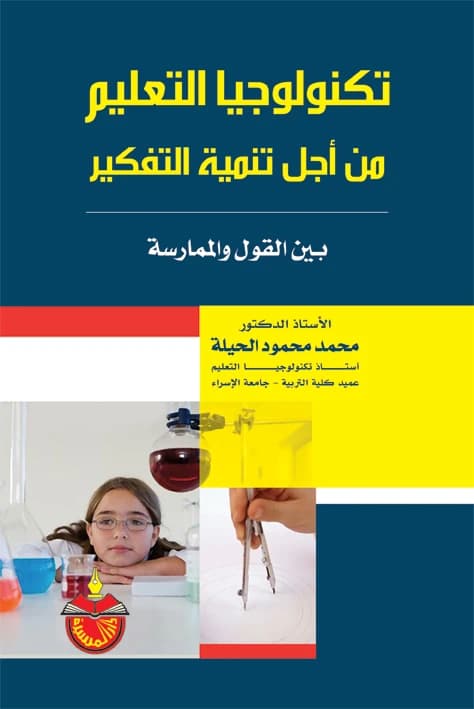
Educational Technology for Developing Thinking - Mohammed Mahmoud Al-Hila - 2009
JOD

Get it by 5 Aug | Order in 2 Hours 44 Minutes
- Return Policy
- Warranty Policy
- Shipping Policy
- Non contact delivery
- Personal Receipt
- Return Policy
- Warranty Policy
- Shipping Policy
- Non contact delivery
- Personal Receipt
Thinking is a complex and purposeful mental activity driven by a strong desire to find solutions or reach original outcomes previously unknown. Since educational technology, in its modern sense, is a way of thinking, it relies on and is inseparable from it. As educational technology follows organized steps that every learner goes through while acquiring new experiences, leading to self-improvement and development, one can, through these experiences, live their existence as any educated person should.
From this, it becomes clear that educational technology has a strong relationship with thinking as a way of life. When we discuss the extent to which the educational system's goals are achieved, and the quality, quantity, originality, and novelty of these goals, it is as if we are defining creativity as a specific outcome. When we mention that educational technology proceeds in organized steps, each influencing and being influenced by the others, then defining these steps, testing their validity, their interconnectedness, and the extent to which they achieve their intended goals, leads us to talk about creativity as a mental process.
This book is a contribution from the author to meet the tangible needs of students in faculties of educational sciences, teachers, and those interested in developing thinking, including parents and supervisors, aiming to reinforce the theoretical aspect (theory) with the practical aspect (practice).
This book contains nine chapters. The first chapter clarifies the meaning of technology, educational technology, and related concepts, defining learning resources in educational technology. The second chapter addresses thinking and creative thinking, including definitions, levels, foundations, justifications, and methods for development, and discusses creativity and its skills. The third chapter shows the link between educational technology and teaching thinking, while the fourth explains the role of individuals (teachers and students) in developing it. The fifth chapter clarifies the role of teaching and learning aids. The sixth chapter shows the role of materials and devices, and the seventh deals with the role of places and methods. The eighth chapter provides exercises and games based on educational technology to develop thinking. The final chapter presents proposed programs and plans for developing creative thinking among students through an inquiry-based approach using educational technology.
- Number of Pages: 288
- Year of Publication: 2009
- Binding Type: Cardboard
- Edition Number: 2
- Printing Color: Black
- Dimensions (cm): 17x24
- Weight (kg): 0.600
- Barcode: 9789957061548







