
Download Our App
Shop your way




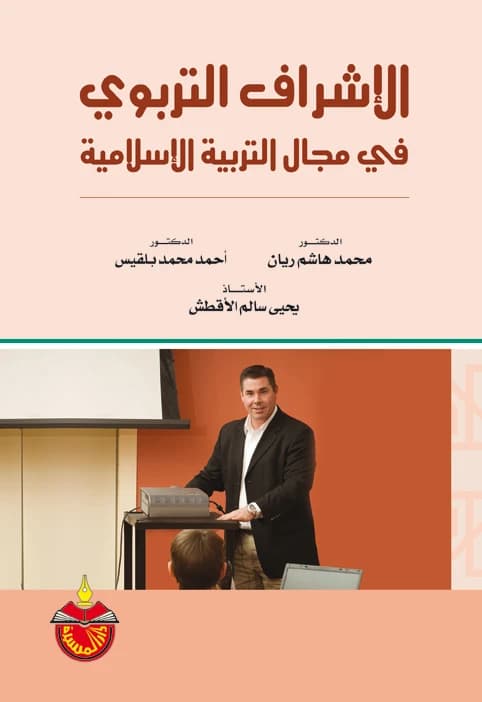
Educational Supervision in the Field of Islamic Education - Dr. Ahmed Mohammed Balqis (2010)
JOD

Get it by 5 Aug | Order in 3 Hours 4 Minutes
- Return Policy
- Warranty Policy
- Shipping Policy
- Non contact delivery
- Personal Receipt
- Return Policy
- Warranty Policy
- Shipping Policy
- Non contact delivery
- Personal Receipt
Over the past three decades, Islamic education has received considerable attention from Muslim educators, resulting in numerous writings that have covered many aspects of this field, including objectives, policies, curriculum, teachers, learners, teaching principles and methods, and evaluation tools. Many university theses have been presented in its various areas. However, the topic of educational supervision in the field of Islamic education has not received its due attention. The general concepts of this subject have remained the standard among teachers and supervisors of Islamic education in Arab and Islamic schools. The time has come to present this topic in an attempt to link the general concepts of educational supervision to this subject, referencing the roots of the supervisory process in Islamic educational thought, while also benefiting from modern research and studies in the field of administrative and educational supervision.
The book is structured to help the reader apply theoretical concepts and ideas practically. Various exercises are interspersed throughout its topics, which the educational supervisor can try independently to ensure their understanding of the material and their awareness of its practical aspects and real-world applications related to supervisory and educational practices. At the end of each chapter, a final evaluation is provided for the reader to conduct self-assessment, confirming their comprehension of the topics presented by referring to the answer key provided after the self-evaluation. This helps them to address any identified weaknesses by revisiting the educational material in the book.
It was fitting for the book to begin with a chapter on the fundamental concepts of Islamic education, stemming from the nature of Islam and its agreed-upon sources: the Quran, Sunnah, consensus (ijma'), and analogy (qiyas), along with the subsequent interpretations of jurists, thinkers, and Muslim educators who based their opinions on these sources. Additionally, the objectives of teaching Islamic education were defined based on the primary goal of Islam: to prepare a righteous individual who believes in God Almighty and follows His guidance, making piety and good deeds the measure of differentiation among people, and making what is lawful (halal) and unlawful (haram) the standard for actions in life. It also works to prepare a righteous nation that upholds virtue, enjoins what is right, and forbids what is wrong, to create a suitable environment for a dignified life for the individual and the community. It also aims to prepare a righteous state that protects the faith and governs the populace according to God's law and methodology based on justice, equality, and consultation (shura) with the people of authority to seek the opinions of experts in all life affairs for the benefit, happiness, and advancement of the nation.
The general objectives of Islamic education and the specific objectives for the curriculum at various educational levels have been defined. To ensure consistency and integration of the branches of Islamic education and to avoid the existing flaw of their separation, a new method of organizing the material was proposed based on the relationships through which an individual navigates to organize their life. These relationships were identified in five areas: the student's relationship with God Almighty, with the Prophet Muhammad (peace be upon him), with their family, relatives, and neighbors, with society, and with their natural environment. The position of Islamic education within the school curriculum was then clarified, along with how to achieve consistency and integration with other subjects, its characteristics, the importance of teaching it to the youth, and its learning resources.
The remaining chapters of the book address supervisory issues.
- Number of Pages: 456
- Year of Publication: 2010
- Binding Type: Cardboard
- Edition Number: 1
- Printing Color: Black
- Dimensions (cm): 17x24
- Weight (kg): 0.850
- Barcode: 9789957065898







