
Download Our App
Shop your way




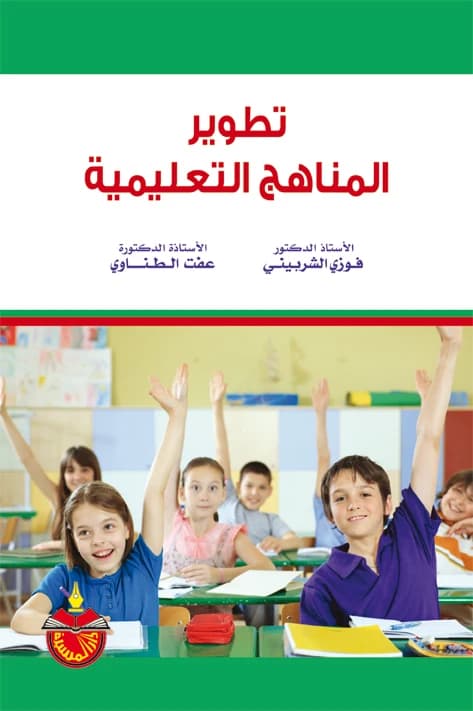
Educational Curricula Development - Fawzi Al-Sherbiny
JOD

Get it by 5 Aug | Order in 3 Hours 56 Minutes
- Return Policy
- Warranty Policy
- Shipping Policy
- Non contact delivery
- Personal Receipt
- Return Policy
- Warranty Policy
- Shipping Policy
- Non contact delivery
- Personal Receipt
Educational curricula currently face numerous challenges, including the massive knowledge explosion in all fields, the technological revolution dependent on advanced scientific knowledge, the optimal use of information, and contemporary global issues such as environmental, population, health, and development problems. It is imperative for curriculum experts and designers to consider and address these challenges when developing educational curricula to prepare individuals capable of keeping pace with and internalizing rapid advancements in their fields. This is achieved by developing their thinking and logical analysis skills, utilizing available knowledge sources in teaching and learning, and providing a technological education that equips them with the necessary knowledge, skills, and thinking methods for life in a fast-changing era.
Therefore, it has become essential to seek new methods and means to confront these challenges and changes, adapt to them quickly, and even influence them positively. This requires those in charge of designing and developing educational curricula to take these challenges and changes into account and use appropriate approaches to address them at various educational stages, both at the planning and implementation levels. It is important to note that the approaches to planning and implementing educational curricula cannot be separated, as some approaches can be used during both the planning and execution phases of the curriculum.
This book consists of fifteen chapters, each representing an approach to planning and developing educational curricula. Each chapter concludes with a set of educational implications that can benefit curriculum experts. These approaches are:
- 1. The Multiple Intelligences Approach: Includes Gardner's theory of multiple intelligences, types of multiple intelligences, factors that activate and inhibit them, how to teach the theory, and reviews teaching activities and learning resources suitable for developing multiple intelligences.
- 2. The Active Learning Approach: Discusses the concept of active learning, its assumptions, foundations, activities, components, and characteristics. It also compares traditional education with active learning, identifies success factors for active learning situations, the roles of teacher and learner, and reviews active learning strategies, its importance, obstacles, and ways to overcome them.
- 3. The Aesthetic Education Approach: Presents the aesthetic experience, its features, and its importance according to John Dewey. It clarifies the concept of aesthetic education, its significance, domains, principles, success factors, and the teacher's role in achieving it, referencing studies on the topic.
- 4. The 21st Century Issues and Challenges Approach: Covers the issues and challenges facing education in the 21st century that curriculum planners should consider when designing, building, and developing curricula. It also reviews studies on building and developing curricula in light of these issues and challenges.
- 5. The Technological Approach: Addresses the role of computers in the educational process, its areas of use in teaching and learning, and reviews studies on its use in developing education. This chapter also covers the role of information networks, explaining services like email, file transfer, remote communication, and global forums, and reviews studies on using the internet in education. It concludes by reviewing the role of multimedia in education.
- 6. The Environmental Education Approach: Discusses the objectives of environmental education and presents studies on including it in school curricula.
- 7. The Educational Modules Approach: Includes the concept of self-learning, the teacher's roles during this strategy, and the role of educational modules in self-learning. It also refers to the modular curriculum and its characteristics, presenting the main components of educational modules, their advantages, and concluding with a model of an educational module.
- 8. The Population Education Approach: Addresses the population problem and the consequences of population growth. It presents the concept of population education, its objectives, domains, international efforts in the field, and reviews studies on including it in educational programs.
- 9. The Integration Approach: Deals with the concept of integration, its levels, and the justifications for adopting it in building and developing curricula. It also covers integration approaches, its dimensions, characteristics of an integrated curriculum, and the difficulties in its construction and application, reviewing studies on integrated curricula.
- 10. The International Education Approach: Includes the concept of international education, its objectives, and domains. It clarifies the relationship between geography and international education and refers to studies on including it in curricula.
- 11. The Science, Technology, and Society (STS) Interaction Approach: Addresses global issues arising from the interaction between science, technology, and society. It presents teaching approaches that emphasize this relationship, efforts to highlight the interaction between chemistry (as a branch of science), technology, and society, and reviews studies on developing science curricula in light of this relationship.
- 12. The Preventive Education Approach: Covers health and safety education, explaining the objectives and domains of each, and reviews studies and research on preventive education in its various fields.
- 13. The Systems Approach: Includes the assumptions of direct instruction and the criticisms against it. It clarifies the importance and justifications for adopting the systems approach in teaching and learning, pointing out its objectives, its role in curriculum development, and reviews studies on the systems approach.
- 14. The Economic Education Approach: Addresses economics and education, defining the economic function of education, the concept of economic education, its objectives, and reviews studies on the topic.
- 15. The Political and Social Education Approach: Discusses the dimensions of political education, which are political awareness and political participation, referencing studies on the topic. It also covers the objectives of social education and studies on its inclusion in curricula.
Each chapter ends with a number of Arabic and foreign references and studies, which the reader can consult for more details on each approach.
- Number of Pages: 376
- Year of Publication: 2011
- Binding Type: Hardcover
- Edition: 1
- Print Color: Black
- Dimensions (cm): 17x24
- Weight (kg): 0.750
- Barcode: 9789957067069







