
Download Our App
Shop your way




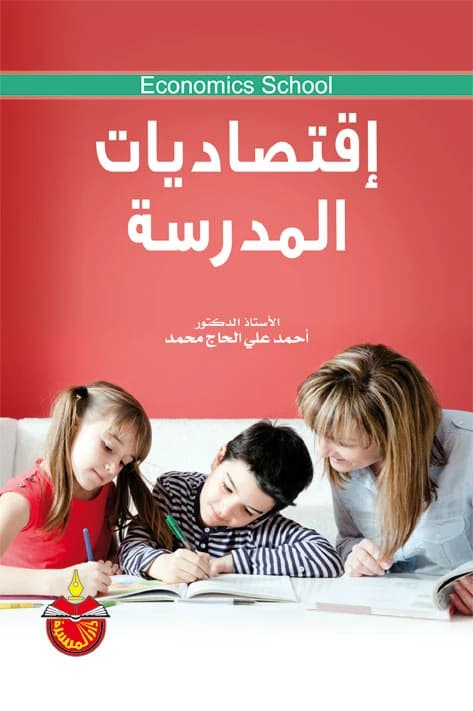
Economics of the School - Ahmed Ali Al-Hajj Mohammed - 2012
JOD

Get it by 5 Aug | Order in 3 Hours 6 Minutes
- Return Policy
- Warranty Policy
- Shipping Policy
- Non contact delivery
- Personal Receipt
- Return Policy
- Warranty Policy
- Shipping Policy
- Non contact delivery
- Personal Receipt
The field of "Economics of Education" emerged as a bridge to solidify the relationship between education and the economy. Through this science, the concepts, theories, methods, and tools of economics are applied to the field of education in a manner consistent with the nature of educational systems and the specific performance of educational institutions in their tasks and pedagogical goals.
The author uses the term "education" (al-ta'lim) in this book instead of "upbringing" (al-tarbiyah), and "economics of education" instead of "economics of upbringing," although the latter is originally more appropriate in both cases. This is because the outcome of education—whether in a school, any other educational institution, or the education system as a whole—is upbringing. When a school provides education, it is not for the sake of the educational process itself but as one of its functions to foster the upbringing of students as its final intended outcome, thereby achieving the pedagogical objectives for which it was founded. The reason for using "education" instead of "upbringing" is not only because it is common in similar literature but also to distinguish between the upbringing provided by the school and that provided by other institutions like the family, mosque, and media. Therefore, it is important to emphasize that the term "education" used in this book encompasses the meaning of "upbringing" in all its dimensions.
This book contains six chapters. Chapter One covers the science of the economics of education, from tracing the relationship between education and the economy with analysis and criticism, to its emergence, development, concept, importance, and fields. Chapter Two discusses theories that analyze the relationship between upbringing and development, presenting ten theories. Chapter Three examines the economics of education within the school as a partial application of the broader field. Chapter Four provides analysis, criticism, and interpretation of spending, cost, and return in education. Chapter Five deals with efficiency and productivity in education and ways to measure and evaluate them. Finally, Chapter Six analyzes the importance and forms of educational investment, identifying the most prominent methods for activating school investment and enhancing its outcomes.
- Number of Pages: 304
- Year of Publication: 2012
- Binding Type: Paperback
- Edition Number: 1
- Print Color: Black
- Dimensions (cm): 17x24
- Weight (kg): 0.650
- Barcode: 9789957068844







