
Download Our App
Shop your way




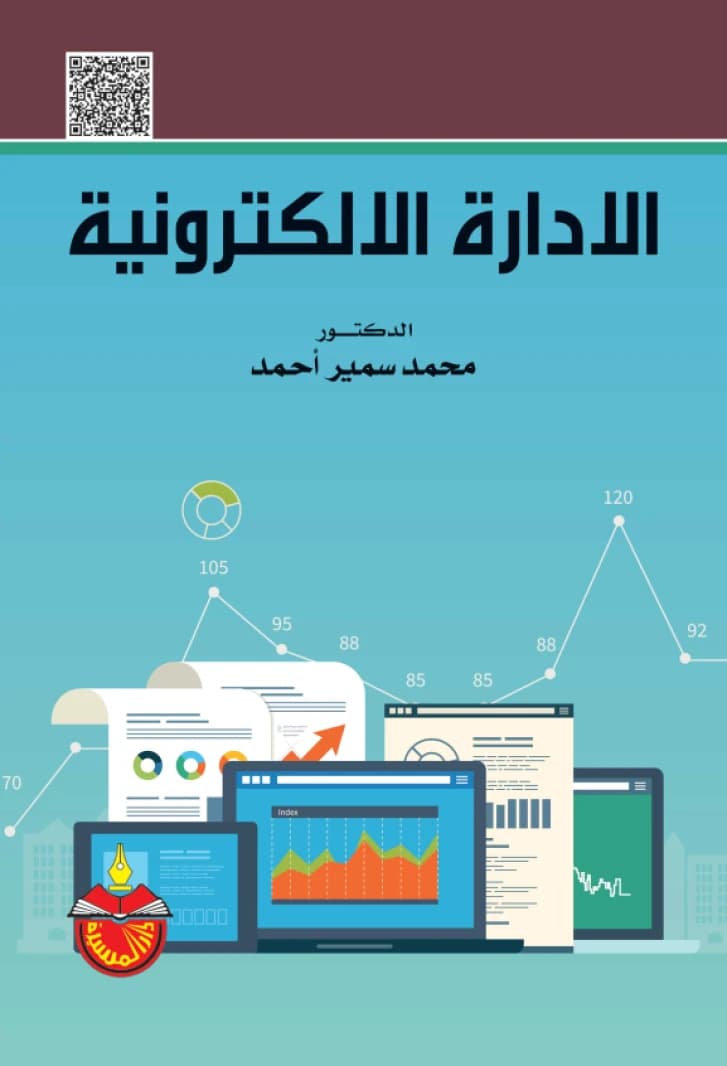
E-Management - Mohamed Samir Ahmed - 2020
JOD

Get it by 5 Aug | Order in 2 Hours 11 Minutes
- Return Policy
- Warranty Policy
- Shipping Policy
- Non contact delivery
- Personal Receipt
- Return Policy
- Warranty Policy
- Shipping Policy
- Non contact delivery
- Personal Receipt
Information and communication technology (ICT) is now an integral part of daily life, having undergone many developments in previous years. Consequently, many projects in various fields worldwide have focused on applying ICT to their operations, driven by a desire to increase efficiency and effectiveness, keep pace with current technological trends, and secure a significant share of the global market by achieving a competitive edge that ensures longevity. From this perspective, the concept of E-Business emerged, and the application of its branches—such as E-Commerce, E-Management, and E-Marketing—has become widespread.
E-Management involves using all administrative methods that work towards the success of a project's E-Business Plan and achieving its goals. It also includes leveraging suitable technological means, systems, and software to manage the project electronically, ensuring its success in achieving the objectives of its E-Business Plan in general and its E-Commerce goals in particular. Although E-Management has not gained the same level of fame as E-Commerce, it now plays a vital role and has become a cornerstone for the success of projects in the e-business sphere.
Specialists are still divided on the primary impact of the Internet. In many cases, the Internet's influence is seen in companies born from it, built on its unique capabilities. Views on the Internet range between two extremes. The first is represented by electronic, digital, or virtual companies that are Internet-centric and focused on its core capabilities. The second is represented by traditional, physical companies that may have added '.com' to their name but still primarily rely on physical operations to create value and generate revenue. Between these two poles lies the majority of companies, continuously shifting their positions.
In recent years, serious intellectual efforts have emerged to define the new field of E-Management, also known as 'Digital Management' or 'E-Business Management'. The rise of E-Management followed the rapid development of e-commerce and e-business and the proliferation of Internet applications. The emergence of this field highlights the need for a modern management approach—based on a new way of thinking and working—to handle the associated technologies, systems, and tools. The author prefers the term E-Management over Digital Management because a core idea of this book is that E-Management involves managing the electronic activities of business organizations (e-Business and e-Commerce).
Ultimately, regardless of terminology, E-Management has brought radical changes to business organizations, markets, industries, and societies, transforming theories of management, organization, and strategies for investing in ICT systems. Due to the lack of a single academic discipline covering all aspects of E-Management without deep dives into related fields, this book's chapters are organized around the systems and tools of E-Management in business organizations and public institutions.
- Number of Pages: 312
- Year of Publication: 2020
- Binding Type: Hardcover
- Edition: 2
- Printing Color: Black
- Size (cm): 17x24
- Weight (kg): 0.660
- Barcode: 9789957065126







