
Download Our App
Shop your way




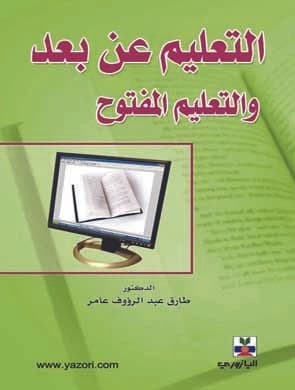
Distance Education and Open Education - Dr. Tarek Abdel Raouf Amer
JOD

Get it by 5 Aug | Order in 3 Hours 13 Minutes
- Return Policy
- Warranty Policy
- Shipping Policy
- Non contact delivery
- Personal Receipt
- Return Policy
- Warranty Policy
- Shipping Policy
- Non contact delivery
- Personal Receipt
- Distance Education (Its Origin – Concept – Objectives)
- First: The Concept of Distance Education
- Second: The Origin of Distance Education
- Third: The Importance of Distance Education
- Fourth: Principles of Distance Education
- Fifth: Objectives of Distance Education
- Sixth: Institutions of Distance Education
- Seventh: Advantages of Distance Education
Chapter One: Introduction
In light of the challenges and bottlenecks facing most education systems worldwide, many countries have resorted to seeking non-traditional alternatives to face the significant increase in demand for education from various segments of society. Despite the large increases in the number of students wishing to pursue education, resulting from the substantial population growth, especially in developing countries, the material resources available to these education systems have not seen significant increases in financial allocations to an extent that would allow for the expansion of traditional education systems to accommodate what can be contentiously called an explosion in student numbers. Based on this situation, the search for non-traditional alternatives whose main advantages are not only to expand educational opportunities and improve its efficiency but also, on the other hand, to contribute to reducing its cost and achieving more rational use of available resources, has become crucial. One of the most important alternatives to solve this problem is the distance education system. Distance education is an educational phenomenon that began in the 1940s and has undergone significant developments since then.
Distance education has become a societal phenomenon that characterizes this era, reflecting the evolution of lifestyles stemming from the numerous technological changes we witness today. These successive changes generate significant transformations that we feel strongly in our daily lives. If it is difficult for adults contributing to active life in society to leave their jobs to receive education that enables them to improve their knowledge and keep pace with development, the method of distance learning can successfully respond to the increasing needs of individuals and groups for training and learning, thanks to its flexibility and adaptability to various situations.
In its theoretical form, distance education is a method of teaching where the learner is physically and/or temporally separated from the teacher, with no personal contact between them. Instead, multimedia is used to transmit and deliver education to learners, relying on printed, audio, visual, and other electronic and technological media. The Telelearning model represents the third generation of developments in this field (technical developments and educational media) and includes video conferencing, audio-graphic communications, and satellite programs.
Distance education represents another strategy through which small countries can provide access to higher education. It is a key mechanism through which many universities in Western and European countries, such as the University of the West Indies and the University of the South Pacific, serve their member states. By using satellites and other technological means, higher education institutions can connect with students in different countries and interact with them in educational courses, in addition to distance education programs also using printed materials and correspondence.
Thus, distance education occupies a prominent place at the beginning of the third millennium due to its potential to educate large numbers of individuals using tools and technologies provided by the information and communication revolution. This type of education is linked to the philosophy of lifelong learning, not for education alone, but for education and development, and for meeting the ever-emerging requirements, needs, and skills. Therefore, it is seen as an evolution of the traditional university itself, so it does not fall behind in its own development, and for the role it plays in the life of society and the means it adopts to achieve this role to maintain its strength in today's ever-changing society.
Weight: 0.5 kg
Dimensions: 17 × 24 cm
ISBN: 978-9957-12-025-5







