
Download Our App
Shop your way




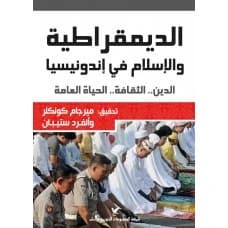
Democracy and Islam in Indonesia
JOD

Get it by 5 Aug | Order in 5 Hours 19 Minutes
- Return Policy
- Warranty Policy
- Shipping Policy
- Non contact delivery
- Personal Receipt
- Return Policy
- Warranty Policy
- Shipping Policy
- Non contact delivery
- Personal Receipt
Since 1998, Indonesia has laid the foundations for a democratic transition, moving slowly but steadily to consolidate democracy in a time of turmoil. How did it succeed in creating a model of democracy to be emulated in the Islamic world? How did the world's most populous Muslim-majority country overcome challenges, not least the threat of separatist movements that oppose democracy and consider it anti-Islamic? How were multiculturalism, ethnicity, religion, and the corruption of the judicial system handled? Why has the role of a military institution that retained its influence and veto power for decades diminished? What reasons led radical groups to submit and agree that non-Muslims should enjoy the same legal and civil status? What factors helped Indonesia, with its diverse society, to avoid the fate of the Soviet Union? These are questions addressed by a group of political scientists, religious scholars, jurists, and anthropologists in a book that examines the Indonesian model in comparison with similar scenarios in Chile, Spain, India, and Tunisia, as well as with the failed democratic transitions in Yugoslavia, Egypt, and Iran. This unique research book takes us deep into the Indonesian experience, which has amazed observers with the miracle of its democratic transformation.
- Edited by: Mirjam Künkler and Alfred Stepan
- Publishing House: Al-Matboat for Distribution & Publishing
- Year of Publication: 2016
- Number of Pages: 364
- ISBN: 9789953888682
- Cover Type: Paperback







