
Download Our App
Shop your way




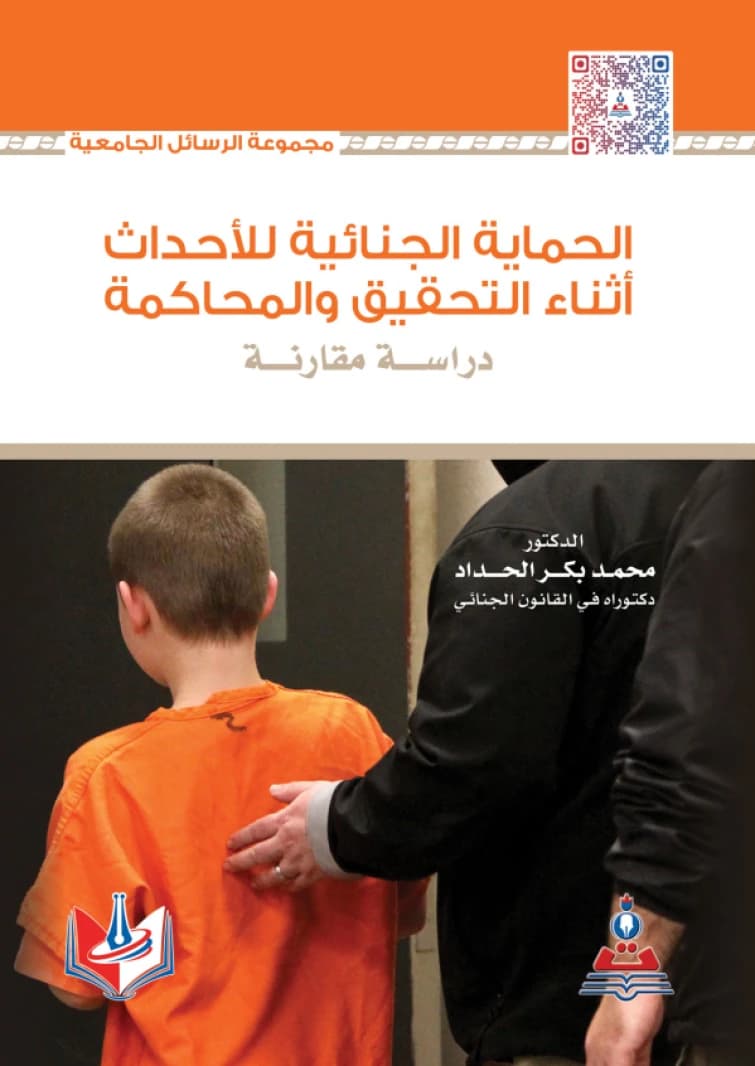
Criminal Protection for Juveniles During Investigation and Trial - Dr. Muhammad Bakr Al-Haddad
JOD

Get it by 5 Aug | Order in 3 Hours 8 Minutes
- Return Policy
- Warranty Policy
- Shipping Policy
- Non contact delivery
- Personal Receipt
- Return Policy
- Warranty Policy
- Shipping Policy
- Non contact delivery
- Personal Receipt
The study of criminal protection for juveniles has been and continues to be a fertile field for researchers across various humanities disciplines. This follows the several developments in criminal philosophy, moving from a dark phase with dangerous pitfalls and adverse effects on the future of juvenile defendants—as they lacked necessary legal protection and were treated like adult defendants—to a stage where they are tried before a specialized judicial body in its formation, procedures, and measures. The purpose is to spare them the stigma of crime and address their transgressions through a special trial that provides them with specific guarantees, as well as others they share with adult defendants.
The reasons for choosing our research topic focus on two axes. The first relates to balancing two conflicting interests: the state's interest in punishing those who violate its systems and laws, and the juvenile's interest in due process, as they are still an accused person whose misconduct has not yet been proven. This is the optimal way to ensure justice for all and serves as a lifeline to help prove their innocence if they are innocent, or lead to their punishment if they are guilty.
The second axis centers on the person of the juvenile defendant and the guarantees they need. They do not possess the mental maturity and full awareness of an adult, which would enable them to appreciate the consequences of their law-violating behavior. Therefore, they are in constant need of special care and treatment that makes them feel safe and secure when appearing before the judiciary, benefiting from efforts at reform and rehabilitation due to their impressionable character. Juveniles constitute the overwhelming majority of the population in most countries; they are the generation of tomorrow and the leaders of the future, and the progress and prosperity of their societies depend on their reform.
Based on the above, some comparative laws concerning juveniles have agreed that this group must be distinguished by special procedural treatment for their trials, which is different in nature from the treatment of adults. This difference extends in its scope and range, whether regarding criminal responsibility in all its aspects or the procedural rules for their prosecution and trial. In the field of substantive rules related to responsibility, some laws have moved towards mitigating the severity of the prescribed penalties for this category of offenders if they commit their crimes at a certain age, or replacing traditional penalties with corrective measures. The goal of these measures is guidance, care, and social harmony, to protect the juvenile from sliding into a path of sin and evil and to eradicate crime and evil from its roots.
In our estimation, laws related to juvenile delinquency and how to confront their crimes represent one of the most important aspects that researchers in legal studies should focus on. The extent to which a nation's law for juveniles is considerate of the social and psychological circumstances, young age, motives, and conditions that led them to crime, determines how advanced that law is compared to others in addressing the problem of juvenile delinquency or deviance. This is what will be covered in this study.
- ISBN: 9789923150122
- Weight: 0.600
- Size: 17x24 cm
- Paper: White
- Pages: 216
- Year of Publication: 2020
- Binding: Hardcover







