
Download Our App
Shop your way




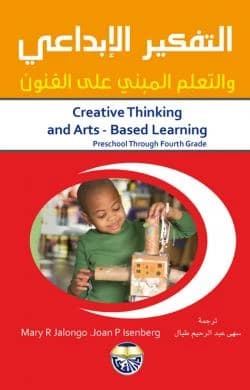
Creative Thinking and Arts-Based Learning by Mary R. Jalongo
JOD

Get it by 5 Aug | Order in 5 Hours 20 Minutes
- Return Policy
- Warranty Policy
- Shipping Policy
- Non contact delivery
- Personal Receipt
- Return Policy
- Warranty Policy
- Shipping Policy
- Non contact delivery
- Personal Receipt
Creative thought and artistic expression: What is the value of these processes and products for children, families, and communities at large? Why should educators care about these matters at a time when the educational scene is dominated by talk of academic standards, teacher accountability, and achieving global test rankings? As this book will argue, the ability to think in productive and creative ways is a survival skill in a world where we are inundated with information daily. In the past, an educated person prided themselves on knowing many things, or knowing a few things reasonably well. Now, knowledge is not enough; instant access to information has made knowing it relatively easy, or at least quick to discover practically anything on any topic. In fact, if the information revolution and industrial technology continue to advance, the children we work with today will have less need to repeat the core content that characterizes traditional early childhood and elementary education. Readers of this book need only look around to see the dramatic changes in expectations for children, teachers, and university education students. Contemporary children are immersed in a world of fleeting images and multiple symbol systems, and their challenges are not limited to negotiating complexities amid growing chaos. Contemporary teachers are expected, through teaching for understanding, to digitally raise national, local, and state indicators and enhance their country's reputation for academic excellence. Today's colleges and universities face challenges in highlighting their teachers' achievements not only in pedagogical knowledge but also in the professional/applied capabilities of early childhood or elementary school teachers. In all these groups, the message is constant: aim higher, achieve more, and make a long-term contribution to society. When the pressure is on, there is a tendency to neglect, completely ignore, or distrust the things that are most important in preparing students and their teachers. We assert here that creative thinking is crucial for survival and prosperity in an uncertain future. Our vision for this book is to help prepare practitioners in the field of early childhood and elementary education to confront the stereotypes that limit the spread of children's creative thinking contributions. It provides our professional colleagues and the public with information about creativity and the arts and influences schools and communities to meet children's creative processes and artistic products with new appreciation and respect.
- Author: Mary R. Jalongo
- Translator: Dr. Suha Abdulrahim Tabbal
- Number of Pages: 504
- Year of Publication: 2013
- Binding Type: Hardcover
- Edition: First
- Print Color: Black
- Dimensions (cm): 17*24
- Weight (kg): 0.899
- Barcode: 9789957079765







