
Download Our App
Shop your way




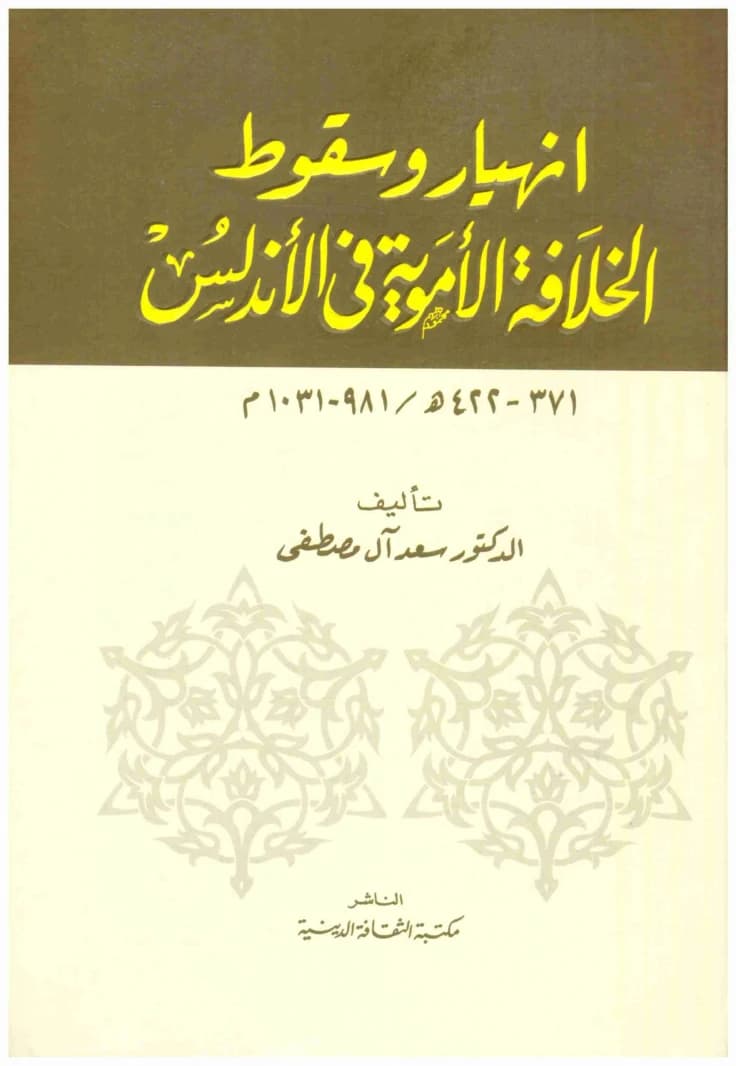
Collapse and Fall of the Umayyad Caliphate in Andalusia
JOD

Get it by 5 Aug | Order in 3 Hours 11 Minutes
- Return Policy
- Warranty Policy
- Shipping Policy
- Non contact delivery
- Personal Receipt
- Return Policy
- Warranty Policy
- Shipping Policy
- Non contact delivery
- Personal Receipt
The collapse and fall of the Umayyad Caliphate in Andalusia traces back to when Abd al-Rahman ibn Mu'awiya of the Umayyad dynasty established an Islamic emirate in Andalusia and parts of North Africa in 756 AD, with its capital in Cordoba. Later, Abd al-Rahman III declared himself Caliph of Cordoba in January 929 AD, shifting away from his previous title as Emir of Cordoba, a title carried by Umayyad princes since Abd al-Rahman I established independence in Andalusia. This state emerged after the Umayyad Caliphate fell in the East to the Abbasids, who pursued the Umayyads, leading many, including Abd al-Rahman I, to flee. Abd al-Rahman I settled in Andalusia and declared independence, allowing the Umayyads to remain in power for nearly three centuries. Known as Abd al-Rahman al-Dakhil for his migration to Andalusia, he established a rule that shifted Muslim governance away from tribalism by curbing tribal leader influence and reinforcing state power through the emir. Subsequently, Andalusia moved towards acquiring civilization.
- Author: Saad Al Mustafa
- Publishing House: Maktabat Al Thaqafa Al Diniya - Cairo
- Edition number: 1
- Year of publication: 2015
- Number of pages: 351
- Number of parts: 1
- Binding type: Hardcover
- Paper type: White
- Print colors: One color
- ISBN: 9789773416386







