
Download Our App
Shop your way




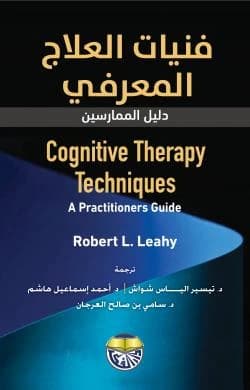
Cognitive Therapy Techniques: A Practitioner's Guide - Robert L. Leahy
JOD

Get it by 5 Aug | Order in 3 Hours 58 Minutes
- Return Policy
- Warranty Policy
- Shipping Policy
- Non contact delivery
- Personal Receipt
- Return Policy
- Warranty Policy
- Shipping Policy
- Non contact delivery
- Personal Receipt
The goal of this book is to give clinicians an opportunity to review a wide range of cognitive-behavioral techniques that may be useful in treating the full spectrum of psychological disorders. My observation is that it's easy for us clinicians to focus on our favorites, applying the same few techniques to almost everyone who comes to us for treatment. This may work for many patients and may be practical if we are training people for short-term, standardized approaches where effectiveness and simplicity are key issues. But for expert clinicians accustomed to facing obstacles and complexity in their work, a small number of techniques is not enough. Having a wide range of techniques derived from (perhaps competing) schools of cognitive-behavioral therapy is more realistic. My observation is that cognitive restructuring works for some people, problem-solving for others, and mindfulness and acceptance for yet others. It may be that you won't know until you try a few different things.
What have we covered in this book? Some may notice that not everything is mentioned here. This is true but necessary. We live in a time where we have a great wealth of valuable clinical approaches, and it is impossible to cover everything. Even advocates of cognitive-behavioral therapy can admit that dialectical behavior therapy, transference-focused psychotherapy, and interpersonal psychotherapy are all effective, and these three branches are all based on psychodynamic analysis. These approaches have excellent practitioners who have made a strong case that there is something of value here. But the current book is necessarily focused on cognitive-behavioral therapy. Behavioral therapists have a whole line of proven techniques, but to make this book manageable, I have referred the reader to other references for this approach. Of course, pharmacotherapy is always an important part of treatment, and this approach can help empower patients to tolerate treatment, for example in bipolar disorder, adhere to a diet, and cope with side effects. In fact, some techniques in this book can help with these important endeavors.
We have covered a lot in this book. We started by reviewing how to elicit and identify thoughts and how to help patients realize that a thought is just a thought, not a reality, a feeling, or a behavior. We reviewed how a patient can learn to evaluate and test thoughts to determine their usefulness, consequences, implications, and validity. Keep in mind that cognitive therapy does not involve denying or suppressing thoughts, but rather eliciting and examining them. The goal is not to get rid of thoughts but to change their credibility and impact. I can have a thought every day that I am a zebra, but when I look in the mirror, I will realize—hopefully—that this thought is not a reality.
- Author: Robert L. Leahy
- Translation: Dr. Tayseer Elias Shawash, Dr. Ahmed Ismail Hashem, Dr. Sami Saleh Al-Arjan
- Number of Pages: 688
- Year of Publication: 2020
- Binding Type: Hardcover
- Edition: First
- Print Color: Black
- Dimensions (cm): 17*24
- Weight (kg): 1.157
- Barcode: 9789957922221







