
Download Our App
Shop your way




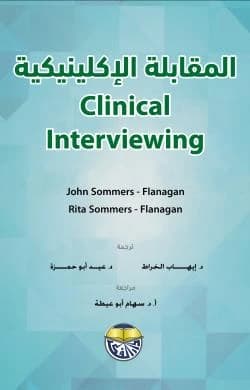
Clinical Interviewing - John Sammers-Flanagan & Rita Sammers-Flanagan
JOD

Get it by 5 Aug | Order in 5 Hours 21 Minutes
- Return Policy
- Warranty Policy
- Shipping Policy
- Non contact delivery
- Personal Receipt
- Return Policy
- Warranty Policy
- Shipping Policy
- Non contact delivery
- Personal Receipt
The clinical interview is the cornerstone of all work in mental health. It involves integrating varying degrees of assessment and psychotherapy. The first edition of this book was published in 1993. We are still amazed by the continuous development and broad practical application of clinical interviews in mental health settings. We live in a postmodern world where language is frequently used to construct and shape arguments. The words we choose inevitably affect our intended message.
Because language can be used for manipulation and deception (as in advertising and politics), we want to explain some of our linguistic choices to give you insight into our biases and orientations. The clinical interview is a phenomenon where many disciplines and branches of knowledge intersect. While revising this book, we sought feedback from psychiatrists, psychologists, social workers, and professional counselors. Unsurprisingly, psychiatrists and psychologists suggested we stick with the term "Patient," while specialists and counselors expressed strong preferences for the term "Client." As a third option, in the Mandarin Chinese translation of this book, the term used is "Visitor." After some deliberation over this dilemma, we decided to primarily use the word "Client" in this book, except in cases where "Patient" is used in the original quoted material.
Just as Carl Rogers shifted in his terminology from "Patient" to "Client" to "Person," we find ourselves moving away from certain aspects of the medical model. This does not mean we disrespect the medical model, but we intentionally choose to use more inclusive language that emphasizes the aspects of normalcy in humans. Sensitivity in addressing gender has complicated how a person's sex is referred to in conversation and writing. In line with tradition and contemporary perspectives, we use plural language (e.g., they, them, their) whenever possible. When speaking in the singular (as in case examples), we use "he" or "she," based on the specific gender of the person in the case. When appropriate, the plural "they" is sometimes used when describing individuals whose gender identity we are unsure of.
- Authored by: John Sammers-Flanagan & Rita Sammers-Flanagan
- Translated by: Dr. Ihab Edward El-Kharrat, Dr. Eid Jalal Abu Hamza
- Number of Pages: 664
- Year of Publication: 2020
- Binding Type: Hardcover
- Edition Number: First
- Print Color: Black
- Dimensions (cm): 17x24
- Weight (kg): 1.1
- Barcode: 9789957922146







