
Download Our App
Shop your way




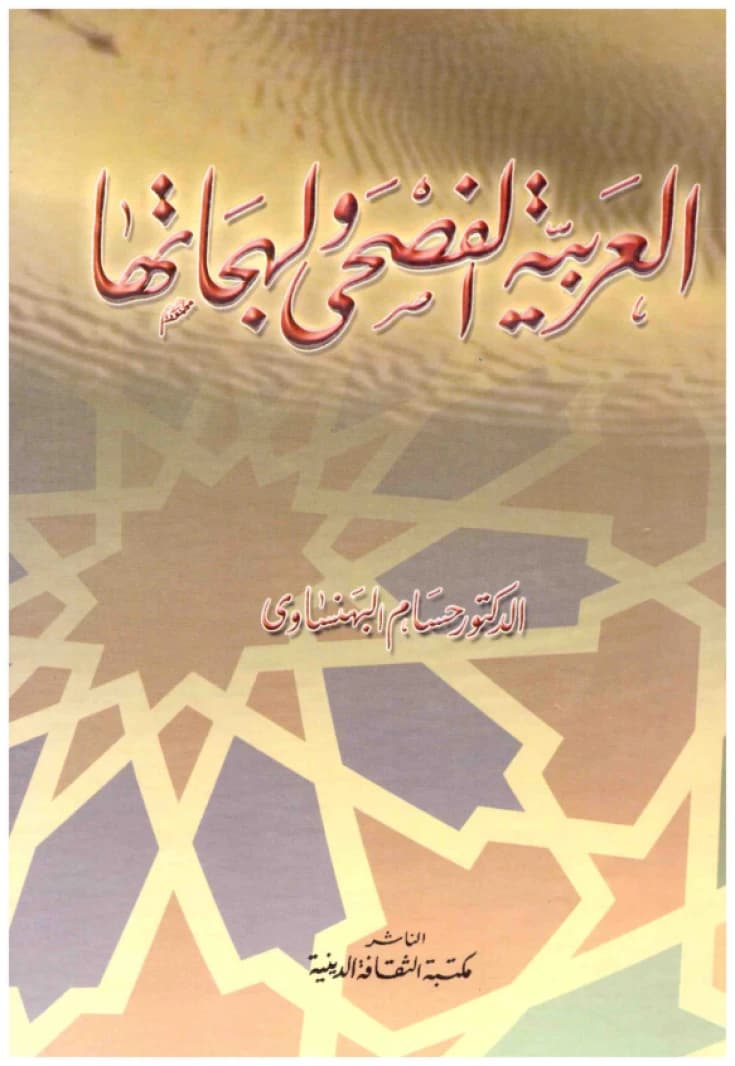
Classical Arabic and its Dialects • Author: Hossam Al-Bahnasawy • 2004
JOD

Get it by 5 Aug | Order in 5 Hours 20 Minutes
- Return Policy
- Warranty Policy
- Shipping Policy
- Non contact delivery
- Personal Receipt
- Return Policy
- Warranty Policy
- Shipping Policy
- Non contact delivery
- Personal Receipt
The Arabic language is one of the Semitic or Jazari languages, with its northern and southern branches. The Northern Arabic language is divided into two sections: extinct northern and surviving northern. We now focus on this language, which Islam unified as an ideal, chosen, and standardized language, worthy of being the tool of expression for the Arab elite rather than the common people. The revelation of the Quran in a clear Arabic tongue enhanced the scope of this unity and strengthened its impact. Its challenge to the Arab elite and their rhetoricians was to produce something similar to it, or even a single verse like it, and it called for the establishment of linguistic unity. Meanwhile, it invited the general public to contemplate, comprehend, and understand its verses, assisting them by allowing for variations in readings and accommodating dialects through its seven famous modes (Ahruf). The linguistic unity that Islam encountered at its advent does not negate the scientifically acknowledged phenomenon of dialect multiplicity before Islam and its persistence afterward. The common Arabs expressed themselves in their own dialects, and the characteristics of their dialects and the features of their pronunciations appeared in their expressions. Ancient linguists did not pay much attention to ancient Arabic dialects because they were preoccupied with the literary, classical language (Fusha) in which the Quran was revealed and in which literary works were composed during the Jahiliyyah (pre-Islamic) period and the early days of Islam.
- Author: Hossam Al-Bahnasawy
- Publisher: Maktabat al-Thaqafa al-Diniyya - Cairo
- Edition: 2
- Year of Publication: 2004
- Number of Pages: 197
- Number of Parts: 1
- Binding Type: Cardboard Cover
- Paper Type: White
- Printing Colors: Single Color
- ISBN: 9773411257







