
Download Our App
Shop your way




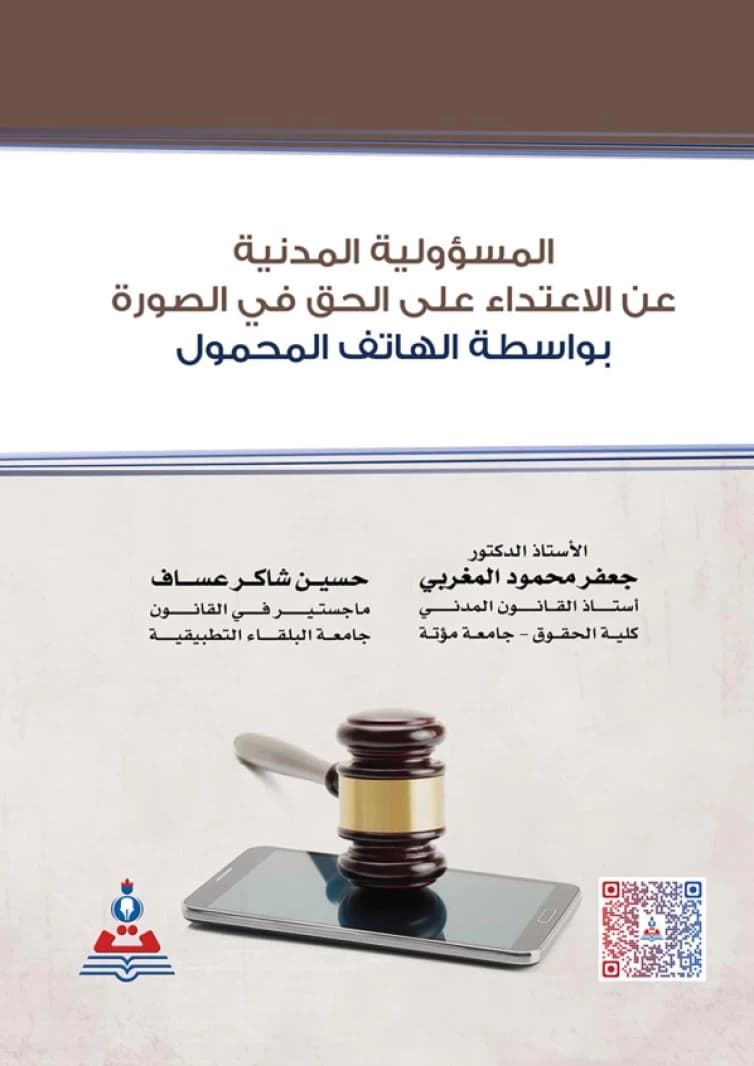
Civil Liability for Infringement of the Right to Image via Mobile Phone by A. Hussein Assaf
JOD

Get it by 5 Aug | Order in 3 Hours 4 Minutes
- Return Policy
- Warranty Policy
- Shipping Policy
- Non contact delivery
- Personal Receipt
- Return Policy
- Warranty Policy
- Shipping Policy
- Non contact delivery
- Personal Receipt
The right to one's image is at the heart of many legal, religious, and social discussions today. This includes both its recognition as a new right alongside established legal rights and the manner of its exercise, especially amidst widespread electronic and technological advancements that have touched every aspect of life.
The progress in photography and its tools has created a new challenge for individuals who wish to keep their private lives away from the prying eyes and cameras of others. It has become easier than ever to intrude upon an individual's privacy in various ways, most notably by photographing them without their knowledge, and without traditional barriers like distance, closed windows, or high walls posing any real obstacle.
A person's image is undoubtedly the most critical element of their private life, which they strive to keep sacred. It is a mirror reflecting their personality, not just in physical appearance but also in the moral aspect that conveys feelings, emotions, and desires. It can reveal what one tries to hide, as Imam Ali said, "No one conceals anything but that it appears in the slips of his tongue and the pages of his face." The image is intrinsically linked to its owner, which gives it its value and the need for respect.
In the past, creating, displaying, or publishing an image did not pose legal problems, as it was done through traditional means like drawing and sculpture, which required the subject to sit for the artist for an extended period, implying consent. However, the evolution of photography, the variety of tools that can capture a person's image discreetly and from a distance, the ease of publishing and circulating images to thousands, and the potential for exploiting them for various purposes using new editing technologies have led to numerous legal, social, psychological, and ethical issues. This has prompted jurisprudence and the judiciary to affirm that individuals have a right to their image, granting them the authority to protect it like any other right.
- ISBN: 9789957165628
- Weight: 0.550 kg
- Dimensions: 17×24 cm
- Paper: White
- Pages: 192
- Year: 2019
- Binding: Hardcover







